Showing posts with label improvisation. Show all posts

Wednesday, April 11, 2012

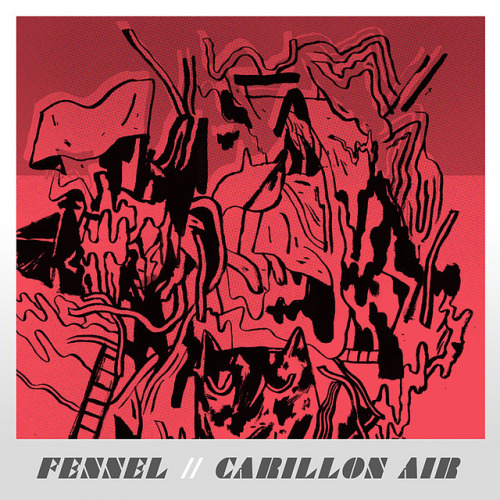
Fennel - Carillon Air


Carillon Air is the name of the new 13 minute Fennel piece available through bandcamp and, more excitingly, absence of wax. As this blog has become a de facto repository of Fennel recordings, I'm dropping it off here with one of my summaries. The core of the piece was assembled from field recordings made in Berkeley and Riverside, CA. Early in January I bought a melodica for playing when I couldn't get around to a piano. Not much of a substitute for a piano, but the thing has its charms, and it really got me thinking a lot more about (what else?) melodic concerns than I had been previously.

In Carillon Air the melodica, layered against itself, provides harmony in the first section, a kind of prelude. From then on it plays a strictly melodic role and there is no more overdubbing. The lines were culled from a lengthy improvisation session recorded in a garden one gray (but still very beautiful) morning.

This piece is my first conscious attempt to record something which could be taken for the audio track of a short film - not just the musical score, but also sound effects, dialog, natural ambiance and all. Though I was concerned with the music moving forward in a coherent way, I didn't really have an imaginary film running in my mind while making this, so the 'plot' is highly ambiguous - I focused on feeling and the interaction of dissimilar sounds (my basic working approach from the start of this project).

Downloadable through either link above. More music coming, always...
& thanks again, Devin Sarno!

Sunday, October 9, 2011

Fennel - Resuming the Trail

Please enjoy the newest full-length Fennel album Resuming the Trail. Most of the work on this was done between early spring and late summer of this year, from the time I was anxiously waiting to see what would result of my school applications, up to just before I moved from Woodland Hills to Riverside. This is my most biographical and varied work yet, and the format this time around is quite different from before: there are 14 tracks adding to just over 35 minutes, and they're all seamless. No one track is fit to be isolated from the rest.

Field recordings were taken around Woodland Hills, Sherman Oaks, Santa Monica, Venice, Berkeley and Santa Barbara, California. These form a continuous environmental backdrop for the album, partly urban and partly natural, over which I put recordings of piano, guitar, voice, fujara (Slovakian overtone flute), and miscellaneous other sounds. My personal narrative unfolds in an exploded-fragmentary fashion, with much ambiguity. Some of the material was freely improvised and left unaltered; some of it was patched together from guided improvisations, and a little of it was completely premeditated and written out.

If you download this from Bandcamp ("name-your-price" as always), you'll get a couple bonus photos and a .pdf score for the piano part to one of the songs. You'll also get a good sized version of the swoon-worthy cover art made by Niv Bavarsky.

Huge thanks go out to everyone who has encouraged me or given advice or criticism of one kind or another. With the release of Resuming the Trail, I won't be producing new Fennel material for quite some time. Graduate study is quickly getting extremely time consuming. That said, I still think about music constantly and can guarantee the world will see more recordings come from me in the future.

Download for free or a donation

Sunday, July 17, 2011

Granules - Unfolding

Artwork by Sepehr Nabi

Hey there readers/world - I hope you didn't think this blog was necessarily dead forever! With great pleasure I'd like to unveil a new album that has been in the works since late 2009. Granules is my open-ended music project with Sepehr Nabi and Niv Bavarsky. Sepehr lives in Oslo, Norway, and Niv and I are based in California (though Niv was attending MICA in Baltimore when his parts for this album were recorded), so this music was all made from material sent back-and-forth over the Internet.

Granules is an experimental workshop - Sepehr, Niv and I have unique musical backgrounds, artistic interests and tastes, and we never once sat down to discuss specifically what our "sound" or aesthetic should be like, though we did discuss tracks in the works. The music developed naturally out of the constraints of our recording capabilities and what we were interested in playing and hearing. Many influences have made deep impressions on all three of us in different ways, including experimental electronic music, jazz, 20th century composition, ambient music, and even hip-hop. We want to abandon genre idioms and explore new expressions through experiments in texture, color and form. We also want to evoke unusual images. Unfolding began as somewhat of a jumble of ideas, but as we worked together for over a year, scrapping and revising tracks, a sense of movement and unification started to come together. I don't want to make any comment as to the emotional qualities of the music, save for that I've honestly never heard anything quite like it.

We present Unfolding on Bandcamp for download in most any file format, free of charge. Note that the album was designed as a continuous musical trip, and several of the track transitions are seamless, so make sure to hear it on a gapless playback device!

Stream and download Unfolding at:
http://granules.bandcamp.com

Friday, March 25, 2011

Fennel - Relics

Striking cover art by illustrator Cam Floyd

I'm very excited to finally give you all a new Fennel release. This 25 minute EP is called Relics because it deals with certain feelings and events that are now for the most part behind me. Work started on it shortly after the occurrence of my graduation from college last year, and continued on and off until the final touches were placed last February. All of the field recordings stem from in and around my home in Woodland Hills, CA.

"Deep Sky" was the very first thing I wrote after releasing A Leap Across A Chasm last June. The piece was inspired by walks around my neighborhood at certain times of day when the clouds and sunlight and trees all coalesce into something sublime. That kind of setting tends to fill me with a particular kind of cosmic longing or nostalgia that is hard for me to put into words. I would like to be forthcoming and acknowledge Brian Eno's "1/1" from Music for Airports as a major influence on the basic form of "Deep Sky"; from the first time I heard that magical track back in 2004, I had always wanted to attempt my own spin on the ambient piano-loop format. My loops (three main themes in different modes centered around the note D) were initially constructed from free improvisations, and then complicated by many dozens of small variations. I hoped to achieve a fractal-like effect, repetitive but ever-changing.

"Memorandum" has its roots in the early experiments that led to my debut full length. One weekend home from school, I was recording in my backyard when some negligence on my part led to an argument with my parents. Everything was caught on tape, but I didn't seriously consider using it for a piece until months later, when "Deep Sky" was nearly done. I ended up juxtaposing the fight with a much more serene memory of mine, that of a 100% ordinary afternoon spent working with my dad to repair a fence. Brought together, the two events give me a valuable, though incomplete, picture of my family dynamic. It is my hope that others will derive their own meaning.

Once again I have made my music downloadable for free at http://fennel.bandcamp.com. I sincerely appreciate all feedback and donations, two things that help ensure more releases in the future.

Best wishes to my readers and listeners!

Saturday, February 26, 2011

2010 - Fifty Great Releases, 5 - 1

5. Teebs - Ardour

Teebs' debut LP for Brainfeeder was one of my most anticipated releases of 2010, and it delivered on my every expectation and hope, and then some. Around the fall of 2009 I heard about Teebs from Nosaj Thing's excellent mix of music for the XLR8R Podcast series. Apparently Teebs got into making music when he sustained an injury from skateboarding and found a lot of time on his hands; somehow, he connected to Flying Lotus and became his roommate in LA. Teebs handed out a CD-R compilation in 2009 which completely sold me the first time I heard it. My readers probably know about me that I put a high priority on beauty, and Teebs makes futuristic instrumental hip hop that possesses utopian levels of beauty.

Ardour takes the best handful of tracks from the Teebs '09 compilation and distributes them among more than a dozen newer tracks to form a very tightly focused album. All but one of the tracks (the dreamy "Long Distance" featuring Gaby Hernandez on vocals) are instrumental, and many of them use a similar combination of chimes, bells, sparkling clean electric guitars, bass, Rhodes, ambient synth patches and traditional hip hop percussion. Lush and warm nearly to the point of humidity, the album effortlessly breezes by with some of the most consistently excellent production, melodic hooks and rhythmic flair around. Not a single track is weak, and a handful of them are as good as anything out there. Why, then, did the album end up at my #5 spot when I initially thought it was Top 3 material?

For being so consistent in instrumentation and so constantly gorgeous, combined with the length, Ardour ends up suffering a little bit from samey-ness and Ear Candy Syndrome. Basically we get a little too much of a really good thing. If the album were shorter or changed up its mood a little more, I would probably call it perfect. It works well as a musical trip to paradise, but I'd like to hear Teebs explore some colors other than glowing pastels. One darker track, and a standout on the album, "Why Like This", suggests he could very well work more with grittier sounds if he wanted.

Despite this selfish criticism I still think Teebs is making some of the most interesting new music, truly evolving beyond hip hop to probe sci-fi realms nobody else is exploring. His live sets go full-on psychedelic at times, and anybody in the vicinity of Eagle Rock should check out the new monthly live event "Futura" at the Center for the Arts, curated by Teebs and Asura. I should also mention that Teebs is a talented visual artist and the painter of his own album cover. With a craft as tight as anybody's in the game, Teebs could become the new most exciting beat pioneer by taking his sound just a little bit deeper.

4. Charles Lloyd Quartet - Mirror

No saxophonist I can think of has released more high quality albums throughout the 2000s than Charles Lloyd. His latest for ECM, Mirror, is not just the best jazz album of 2010 but one of the finest albums Charles Lloyd has ever recorded in his 45+ years as a respected improviser, interpreter and composer. His current band, with Jason Moran on piano, Reuben Rogers on bass, and Eric Harland on drums, is one of the strongest active jazz quartets. Their last album was the 2008 live concert recording Rabo de Nube, highlighting their passionately energetic interplay and daring solos. Things are relatively more toned down and introspective on Mirror, which features the group at their most sensitive and elegant.

The track selection includes several Charles Lloyd originals including the beaming, lovely "Desolation Sound", asymmetrical "Mirror" and exotic "Being and Becoming", as well as fresh interpretations of standards and spirituals like "I Fall in Love Too Easily", "Go Down, Moses", and "The Water is Wide". The band plays two Thelonious Monk tunes, "Monk's Mood" and "Ruby, My Dear", giving both of them an indescribably pretty, closer to celestial treatment; at one point of Jason Moran's supremely lyrical solo on "Ruby, My Dear" he lands on a note in the upper register and repeats it over and over while echoing it an octave below - this is one of the most heart-stoppingly-lovely brief moments in music recorded in 2010. "Lift Every Voice and Sing" has its anthemic melody stretched and contracted over rapidly skittering drums in more or less controlled free-time, and after a rollicking, Jaki Byard-esque solo from Moran, Lloyd releases uninhibited streams of melody worthy of John Coltrane.

The meditative, spiritual and deeply inspired mood throughout the album is encapsulated in the final track, "Tagi", which features Charles Lloyd reciting verse from the Bhagavad Gita before launching into joyous sax improvisation. "Become angry, you confuse your mind. Confuse your mind, you forget the lesson of experience. Forget experience, you lose discrimination. Lose discrimination, you miss life's only purpose." This is contemporary jazz as moving and essential as anything recorded in its golden era.

3. Celer - Dwell in Possibility / Dying Star / Honey Moon

Dwell in Possibility

Dying Star

Honey Moon

Three of Celer's many 2010 releases impressed me so much on the first listen, and continued to deepen with further listens, that I couldn't pick just one to make my Top 3. All three are of quite different breeds, and all are top tier entries to the Celer catalog and good starting points for new listeners to the group.

Dwell in Possibility was the very first full-length Celer album to be released on vinyl alone. Its name is loosely suggestive of its content - a large number of musical possibilities contrasting in timbre, texture, color and mood rapidly float by like a sequence of (day)dreams. The instrumentation includes processed voice, cello, violin, piano, ocarina, field recordings, rocks, whistles, a toy organ, and cassette tapes; none of these are clearly recognizable for what they are, though their diversity comes through in the subtle movement from one combination of timbres to the next. Side 1 is titled

"I've Thought Only of Empty Shadows / Embark, Hollow Heart /
Adhered Irreverence / Empty Streets of Accurate Reasons /
The Street Rain & Pain of the City Rests Under My Toenails /
One Long Blast / Fine-Tuned Treetop / Functioning Voluptuary
"

revealing that its 18-minute form is subdivided into 8 distinct movements. Though there are no gaps between movements and the dividing points are pretty fuzzy, the changes are much easier to perceive than on other of their albums that follow a similar plan, e.g. Poulaine in 13 Parts and Fountain Glider in 22 Parts. Nevertheless, the structure takes many close listens to carve out. From a spooky beginning comprised of muffled and detuned strings, Side 1 meanders amorphously until more sustained drones emerge, first in the high and then low registers, the feel becoming increasingly uneasy. Tension mounts as a filter passes over the thick stream of drones, only letting through a few in the middle register, becoming more concentrated and anxious. The filter breaks and a huge and ominously resonant tone cluster bursts onto the sound stage, only to gently subside into a lacuna long enough to reset the listener's bearings until another monumental mass of pulsing bass tones comes rolling along. This dark wave leaves a limpid field of bright drones in its wake, washing away the earlier atmosphere of dread and warmly closing Side 1 with the solace of fragile, shifting beauty.

Side 2, only slightly shorter than Side 1 and divided into seven parts, is titled

"A Mislaying of the Out-and-Out / Trespassing In Love's Furrows /
Umbrella Terms Protecting Puddles / Bony Hands and Hips Drawn /
The Satisfied Disorder / Say A Prayer For Me Tonight / The Veins of My Days"
.

The first portion of this side is distinctly sadder in tone than anything on Side 1, making its transition to the blissfully enchanting middle section all the more sublime. The record then enters a region more stable, focused, reserved and pure than any heard leading up to it, ultimately closing on a note of melancholy. 'Deep' hardly begins to describe it all; be sure to try spinning it at 30 RPM to go even deeper.

Dying Star is a very different affair. The instrumentation on this 50 minute album reads "Analog Synthesizer, Mixing Board". That's it. The entire album was free-improvised in one shot on a keyboard, without post-processing applied, which gives us a unique document of Will & Danielle Long working purely on instinct, in the moment. The control, restraint and taste they maintain in this most demanding of formats is downright incredible; this dying star is not a violent supernova, but a white dwarf billions of years old, finally puffing away its last layers. Activity is kept at a relatively low level for the most part, and the album is mixed very quietly; amping up the volume isn't encouraged, as this music was meant to capture a sense of seclusion. Despite how low-key and relatively static the tracks are, close attentive listening is greatly rewarded every time a subtle shift or accentuation occurs. In particular, there's a magical moment that another reviewer described right on the money:

"Yet despite the seeming placidity of the Dying Star's trajectory, the album's most poignant moment comes at the beginning of the final track. Flickers (Goodnight) is the only track that doesn't begin in silence, but instead is crossfaded directly from its predecessor. Even more significant, its continuing drone is overlaid with the only two even mildly percussive events, aptly characterized by the flickers in the track title, coming at the very beginning of the track and echoed about forty seconds in. These two events, so quiet as to be barely suggested, and appearing only after forty minutes of quiet undulating drones, are Dying Star's hidden treasure. Is it the dying star finally imploding, creating a brief flash all too easily overlooked? Has the listener drifted into an oblivious somnolence and heard it only in his or her dreams? Celer makes a call to the listener's attention and imagination and thereby elevates this release to one of their best." - Classical Drone

Well said, Caleb Deupree.

Neither as reserved & ascetic as Dying Star nor as diverse & kaleidoscopic as Dwell in Possibility, the cassette release Honey Moon occupies a somewhat more standard place in the Celer discography. The album was recorded "at home on the Autumnal Equinox, 2008" and is nocturnal through and through. Each side of the cassette has three tracks separated by silence, adding up to nearly an hour of Celer's trademark hypnotic immersion. Though the title suggests brightness and the joy of new matrimony, the work is eerily moody, balancing the murky feelings of the night with the ethereal glow of the moon.

Celer continue to stun with their ever-growing pool of releases. Thankfully, the rate of new material coming out seems to have curbed a bit, giving us some time to digest all that they've given us so far. I'm nowhere near exhausting all the beautiful and subtle details on the three albums in this review, let alone the dozens of other of their albums available. 2010 removed all doubt that Celer have the most impressive discography of any ambient group.

2. AFTA-1 - F O R M

I think I will take the lazy way out with this one and link to my past review of the album. Nothing has changed with respect to how strongly I feel about this jewel of instrumental hip hop. This is one of not too many albums I'm happy calling "perfect". How AFTA-1 remains an under-the-radar, unsigned artist, I have no idea. Easily one of the most talented and individual voices working in this new wave of beat based music.

1. Flying Lotus - Comosgramma

Cosmogramma is not a perfect album. It's not the best thing I've ever heard or even necessarily the most moving thing I heard in 2010. That said, I can't deny that it's the most unprecedented, important, on-another-level album released last year, promising more great and exciting things to come in bigger ways than any other 2010 release.

My quibbles with Flying Lotus' masterpiece are few in number and nitpicky. First, I think he could have and should have employed his cousin Ravi Coltrane to more substantial ends. The two tracks Ravi is afforded, "Arkestry" and "German Haircut", both sound like amorphous interludes - frankly, filler - compared to the rest of the album. For how indebted to jazz Cosmogramma is, I wish it had taken what was a ripe opportunity to include some actual trailblazing future-jazz with these tracks. Second, the album's structural arc is very hard to get a grip on, and I'm still not totally sold on it, particularly with how it opens, immediately throwing the listener into a fray of hectic confusion before shifting gears; you know something funny is going on when the fourth track is titled "Intro". I've heard the argument that Cosmogramma is divided roughly into three sections which represent the old Flying Lotus style (loop-heavy electronic arcade Los Angeles era), the new style (more organic and jazz influenced), and the transition between the two. Fair enough, but that kind of meta-ness distracts me a little bit, and overall I wish I simply got the new Flying Lotus. "Intro" would have made a really sweet first track.

Okay, this hasn't been the most glowing review so far for what I'm calling the album of the year. The truth is, what I perceive as flaws are the result of an excess of brilliance, not a lack of it. On the positive tip, there are about fourteen or so tracks here that are some of the most mind blowing things you can hear right at the moment. Many, many words have already been written about how great this stuff is, and in the interest of finally being done with this Fifty Great Releases list, I won't add too many more. Flying Lotus is a genius and charging the way to a future of sound I can't really imagine. His influence on other musicians is profound, and with his Brainfeeder label promoting artists like piano prodigy Austin Peralta, he may just be able to make jazz cool again with the young kids. Conclusion: if you live under a rock and haven't heard Cosmogramma yet, I wholeheartedly recommend you get on that ASAP.


Wow! It feels good to finally have this project behind me. I think 2010 was one of the most amazing years for music in recent memory, and so far 2011 has been delivering equally amazing goods. At this point I'm going to take a little break from reviewing to focus on composing and recording some new music. I hope you enjoyed my (way past its due-date) Top 50!

Wednesday, February 2, 2011

2010 - Fifty Great Releases, 10 - 6

10. Keith Jarrett & Charlie Haden - Jasmine

A quick glance at this deceptively simple album cover may lead many to see nothing more than a couple intersecting plane figures. Look a little longer however and you notice that the design is more naturally interpreted as the result of one continuous line motion - it actually cannot be broken down into two complete, overlapping rectangles. I smell an analogy. The music on this album, too, is deceptively simple. Keith Jarrett and Charlie Haden play so straight-ahead throughout Jasmine that it could have been recorded in the early '60s (except that a few of their song choices hadn't been written yet). However, there is a depth of communication and sensitivity of musicianship present that is rarely heard in jazz of any period, except from total masters of the art. This music cannot be effectively broken down into two complete, overlapping piano and bass parts.

Eschewing all pyrotechnics and showboating, Jarrett and Haden offer a revitalization of one of my favorite jazz formats: the stripped-down deep ballad. It had been three decades since the two played music together before Jasmine, but each is such a consummate musician individually, and each is so concerned with subtlety and refinement in particular, that their long time apart did nothing to affect their compatibility. They sound like old friends playing from the heart. If Jarrett takes somewhat more time in a leading position throughout, Haden makes the deliberateness of his understatement clear in his solos, which never once call special attention to technique or speed. All the delicacy is called for, as Jarrett explicitly writes that this is nighttime music for lovers - but it's also anytime music for the self-reflective. Anybody who appreciates the 1960s recordings of Bill Evans (Portrait in Jazz, Waltz for Debby, Moon Beams, Undercurrent and a lot more) should make it a priority to hear Jasmine, especially Jarrett & Haden's contrapuntal cover of Evan's jaunty and cool "No Moon At All". Without any uninspired moments, this is the most intimate and straightforwardly beautiful recording Keith Jarrett and Charlie Haden have released in a long time, together or apart.

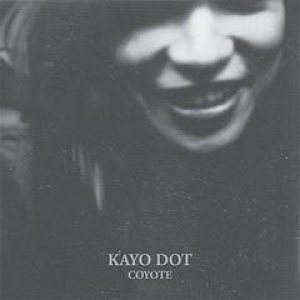
9. Kayo Dot - Coyote

It's becoming increasingly hard to describe what kind of music Kayo Dot make. From the metal roots of their progenitors maudlin of the Well, through four LP releases and several changes in personnel, the band has evolved past the point of genre classification. I like the non-descriptive umbrella "new chamber music" for their third album Blue Lambency Downward and their latest, Coyote. The instrumentation includes bass, drums, vocals, violin, trumpet, saxophones, and synths - and almost no guitar, a significant choice for a group that's been moving further away from their aforementioned metal roots.

What unites all of their albums is the presence of (melo)drama: concept-driven narrative arcs, references to the occult, dark and often dissonant instrumentation, and an air of total seriousness. Actually, moments of Blue Lambency Downward reveal the band's unique sense of humor, but there's nothing funny about Coyote, except maybe its name. The story behind the album was developed by Yuko Sueta, artist and close personal friend of group-mastermind Toby Driver, during the last stage of her life; sadly, she lost a battle with breast cancer. Musically it's the band's most unrelentingly heavy and pitch-black album to date, heavily influenced by '80s goth rock bands like Bauhaus and Faith and the Muse. Driver also acknowledged another interesting influence on the album, Herbie Hancock's Sextant. At no point would I really call Coyote "jazzy" but there are definitely places where the trumpet and sax arrangements recall Eddie Henderson's colorful solos, and this is also the most rhythmically charged, at times almost groovy Kayo Dot album.

Coyote is the band's shortest LP at a little under 40 minutes, and given its intensity and complexity that's not a bad thing. "Calonyction Girl" opens very strongly with menacing gestures from the violin, bass and drums; rarely have I heard bass harmonics sound so sinister. Driver quickly brings his voice to the forefront with pained, elongated phrases in fluid rhythm. After three minutes the song picks up momentum and becomes more rhythmically defined, ultimately building to a crushing odd-meter vamp that could be Kayo Dot's spin on "Hidden Shadows" (Herbie Hancock, Sextant). The song also features one of the band's most surprising and lovely moments as it deceptively closes on a totally unexpected note of joy, with an extended major chord.

Continuing with a song-by-song analysis would result in an overly long review (not to mention spoil all the album's nice surprises), so suffice to say that the rest of the material maintains the standard of excellence set by "Calonyction Girl", though there are no further respites to happiness. The brilliant compositional arrangements throughout deliver fear, anger, sadness, beauty and wonder with an intensity few bands can match, and really, no other bands I know of are even trying to meld popular heavy music with 20th century avant-garde techniques in a remotely similar way. Kayo Dot are certainly a one of a kind group and they keep churning out masterpieces without repeating themselves.

8. Supersilent - 10
Supersilent's tenth album marks a very different direction for Deathprod, Arve Henriksen and Stale Storlokken. Lacking a drummer, the band has turned to increased harmonic sophistication and textural diversity to hold the listener's attention as they explore the infinite possibilities of free improvisation. The brief 10.1 begins with a piercing sustained trumpet note from Henriksen, over which Storlokken scatters some clear high piano notes. Storlokken harnesses chromaticism beautifully without giving a sense of total atonality, and the stark opener gives the impression of a dirge or elegy as Henriksen's tone takes on greater inflections of pain. Quite suddenly this melodic start completely gives way to texture, as the creeping fog of 10.2 fades in and Deathprod weaves a noxious mist with his one of a kind "Audiovirus", an amalgamation of signal processors. No band communication is apparent on this track, but it is effective ambient music. 10.3 and 10.4 return to the instrumentation of the opener plus electronics, with Storlokken on piano playing his most harmonically daring material to date. Apparently he was influenced by the compositions of Gyorgy Ligeti for these sessions, and one can definitely hear the impact of the 20th century avant-garde in general on his playing. Whereas previous Supersilent albums tended to be on the harmonically static side, generating interest mainly through dynamic variation, 10 features frequent distant modulations, chromaticism, artificial scales, and overall a much more impressionistic and unpredictable sound. When Storlokken untimidly lands on a surprising chord, the other players react and adjust immediately so nothing sounds like a mistake.

On 10.5 Supersilent work with bowel-rumblingly heavy drones and harsh noises reminiscent of their earlier material from 1-3, evoking the slow plod of some kind of megalithic golem bent on breaking stuff. It's an unexpected turn on this album, but a welcome switch to a sound many have come to expect from the band: thick, with a directly gutsy and aggressive attitude. This doesn't develop for long though, as 10.6 bends back in the opposite direction to textural sparsity and lovely diatonic melodies from the trumpet and a Brian Eno-esque wobbly keyboard sound. Beautiful melodic phrasing continues with the next two tracks; 10.7 is a dreamlike interlude for piano and trumpet with crystalline, pointillistic piano lines that are chromatic yet strangely consonant, and 10.8 - the longest track and functional centerpiece of the album - is arguably the most earnest and lovely piece the band has ever recorded, like a hymn on the sadness of existence, with Henriksen displaying the heights of his lyricism.

Things take another sharp turn with 10.9, another standout track and a return to Deathprod's thick ambient textures, this time more in the hazy extraterrestrial vein previously explored on 6 (probably Supersilent's most consistent, best album, and for me one of the absolute greatest records of the 2000s). Geologic bass tones mix with subtly shifting drone pads and bleeping alien signal transmissions to give a sonic picture of lonely beings marooned on an uncharted planet. Contrasting greatly with this is 10.10, the humble jewel of the album, less than 90 seconds of exquisite guitar, trumpet and piano interplay around a major triad. Yet another curve ball is tossed at the listener with 10.11, the fifth track on 10 under two minutes long. Here (and only here) percussion and repetition are the dominant elements, with a glitchy percussive sound repeating at unsteady intervals against computerized blips. Machine-like in timbre yet organic in development, the zen-like track reminds me of some of the more abstract material on the classic ambient glitch album Frame by Shuttle358.

10.12 closes the album on a foreboding note. Again Storlokken's piano playing displays sophisticated harmonic awareness, with dark polytonalities echoing Ligeti and Bartok. He mainly stays in the low registers of the piano, building tension while Deathprod and Henriksen provide additional dark colors. In the final quarter of the piece the trademark Supersilent UFO synth sound enters in the upper register, offering a climactic melody supported by the trumpet. Finally out of the dissonance the piano reveals a tonic note, and the piece ends with a firmly resolved cadence.

Supersilent have evolved in range with each release, but 10 displays them in a particularly sharp period of stylistic transition. Never before have their improvisations sounded so deliberate and planned out, almost mistakable for fully composed contemporary chamber music. Losing their drummer forced them to either quit or else drastically change their language and scope, and happily in choosing the latter they've recorded one of their most fascinating and moving albums.

7. Madlib - Medicine Shows

Medicine Show #4: 420 Chalice All Stars

Medicine Show #5: The History of the Loop Digga

Medicine Show #7: High Jazz

Medicine Show #8: Advanced Jazz

The award for hardest working and most diverse producer in the game today goes to Madlib. At the beginning of 2010 it was announced that Stones Throw would be releasing a new Madlib full-length every month through the whole year, alternatively in the form of albums and mixtapes. Dubbed the Medicine Show series, ten of the twelve releases have seen the light of day; numbers 9 and 12 remain mysteriously unavailable. As it stands the collection is as follows:

#1: Before the Verdict
#2: Flight to Brazil*
#3: Beat Konducta in Africa
#4: 420 Chalice All Stars*
#5: History of the Loop Digga
#6: The Brain Wreck Show*
#7: High Jazz
#8: Advanced Jazz*
#10: Black Soul*
#11: Low Budget High Fi Music

*
mixtape

All of the installments I've heard range from very good to outstanding, and there are several I'd like to draw particular attention to. I've been hoping for a new Quasimoto album for a long time - The Unseen (2000) is one of my favorite hip hop albums ever, and The Further Adventures of Lord Quas (2005) is a great companion to it, if not a classic in itself. Episode five of the Medicine Show isn't a new Lord Quas album, but it's about as good instrumentally as The Unseen, and resides in a similar realm as that masterpiece. All of the material on the archival History of the Loop Digga was created prior to 2000, and it almost comes across like a collection of mostly-instrumental B-sides to The Unseen, making it a jazzy-hip-hop treasure trove. Alongside Beat Konducta Vol. 5-6 (Madlib's tribute to J Dilla) and the aforementioned Quasimoto albums, Medicine Show #5 has joined the ranks of my absolute favorite Madlib releases. The last five tracks feature Madlib freestyling with his Oxnard crew, and a number of Lord Quas motifs appear, like the sample "Warning...the Surgeon General...has determined...that the sounds you are about to hear...could be devastating...to your ears..."

Medicine Show #8: Advanced Jazz is a mixtape of trail-blazing jazz artists with some vocal skits interspersed throughout (it wouldn't be a Madlib release without some kind of vocal element). Happily, the skits don't detract from the great jazz selections at all, as they're either hilarious or interesting throwbacks to 60's and 70's culture. The tracks are named after jazz masters, like "Miles", "Ornette", "Pharoah", etc. I don't recognize any but one of the selections, namely Grant Green's terrific solo on "Back From The Gig" from Horace Parlan's album Happy Frame of Mind, which I reviewed a while back. This appears at the start of track 2, "Ornette", and none of the other various selections on this track sound like Ornette Coleman to my ears; there seems to be no connection between the titles and the artists present on each track. The material stays on the uptempo, fiery and exploratory side, and overall the mixtape gives the listener the impression of listening to one of the coolest jazz radio programs ever, without any DJ commentary but featuring a wide range of engaging supportive vocal performances. It sure would be nice if a full track list surfaced.

Other great entries in the series include: #6: The Brain Wreck Show, a collection of psychedelic 70s Kraut rock - turns out Madlib is a fan of Brainticket; #4: 420 Chalice All Stars, a crucial compilation of classic dub and roots reggae; #3: Beat Konducta in Africa, yet another deep, ambitious and banging entry in the Beat Konducta series; and #7: High Jazz, which features Madlib playing different live instruments under many aliases like Yesterday's New Quintet, the Jahari Massamba Unit and others, showing Madlib to be not just one of the greatest beat composers but also an adept and sensitive live player. I can't wait to find out what the last remaining album and mixtape will be like. Maybe, just maybe, the long awaited third Quasimoto LP is close at hand. Until the day that certain-to-be-crazy album emerges, though, I'm more than satisfied with the torrent of releases Madlib has been churning out; not all of them are top tier relative to his entire discography, but all of them are top tier relative to new music in general.

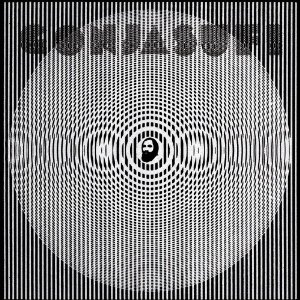
6. Gonjasufi - A Sufi and A Killer

One of the most diverse, unique and memorable albums of 2010, A Sufi and A Killer was released to just about unanimous acclaim, and I won't be going against the grain. Gonjasufi came on my radar via his contribution to Flying Lotus' Los Angeles in the form of those hauntingly cracked vocals on "Testament". Shortly before the release of Gonjasufi's debut LP, the single "Ancestors" made waves on the Internet; produced by Flying Lotus, the brilliant track combines ocean-deep bass lines, harmonium drones and introspective sitar melodies with Gonjasufi's anguished vocals on the brink of breaking. This track had me looking forward to an album midway between Los Angeles and India, but A Sufi and A Killer is much more multidimensional than that. Most of the production is handled by The Gaslamp Killer, well known for his encyclopedic knowledge of obscure world psychedelia, and Gonjasufi's debut LP has not just Indian flavors but Turkish, Middle Eastern, blues, rock, soul, folk, funk, hip-hop and even doo-wop. All of these influences are filtered through a lens of decay and grime - as Flying Lotus put it, "timeless, incredible filth" - resulting in a one-of-a-kind sound that's simultaneously ancient and futuristic. The opening prelude "(Bharatanatyam)" with a steady pounding drum and tribal vocal chant sets the scene with what sounds like centuries' worth of sonic distortion and patina.

Standouts are many on this almost hour-long album. Preceding "Ancestors" (the only Flying Lotus-produced track on the album, and one of the best cuts) is the excellent "Kobwebz", soaked in reverbed, overdriven guitars and vocals, spacey synth swoops and Turkish scales. Later there's the golden shimmering 70's psych of "Stardustin'", immediately followed by "Kowboyz and Indians", the most swagged out Bollywood-ish track I've heard. Several gems are contributed by producer Mainframe, including "Candylane" with its fatally-funky bassline, and the retro-electronic, almost Radiohead-esque "Holidays". On "Ageing", produced by The Gaslamp Killer, Gonjasufi imitates the wispy, frail vocals of a wizened old man, over a twisted Delta blues. Throughout the album Gonjasufi demonstrates amazing vocal range, and the producers treat his timbre in a variety of effective ways, usually towards the end of making it sound dirtier.

A Sufi and A Killer is an ambitious and somewhat sprawling album that requires multiple listens to really unlock, but it should be clear from the first that it's like nothing else out there. Gonjasufi came on the scene a fully matured artist with a compelling vision, and I eagerly await his next release.
Saturday, January 1, 2011

2010 - Fifty Great Releases, 30 - 21

30. Big K.R.I.T. - K.R.I.T. Wuz Here

Bit K.R.I.T. (King Remembered In Time) released this full studio album as a free digital download last June and firmly established himself as one of the most exciting voices of the South. His intelligence and hunger to succeed are delivered through the classic tradition of Underground Kingz, with honest lyrics backed by highly musical production (Big K.R.I.T.'s own) that includes funky organs, mellow Rhodes, wah guitars, cold piano runs and a lot more. Some of the cuts are deliciously 90s, like the super faded and smooth "Moon & Stars" featuring the still-relevant veteran Devin The Dude. Big K.R.I.T. has it all and I can't wait until I'm hearing new tracks of his dominating the rap charts. One can hope.

29. Dirty Projectors and Bjork - Mount Wittenberg Orca

New jaw-dropping material from one of the most unique and important songwriters active today, Dave Longstreth. I revere this guy's ability to combine direct pop sensibility with really smart composerly ideas that draw from, for example, Medieval polyphony (hocketing). I feel like, if he wanted to, Longstreth could easily compose amazing works for the full modern orchestra. Instead, we get advanced works for the modern "indie band" format that sound like no other music in existence. This stuff is so good it's worthy of scholarly attention. The fact that Bjork is on this EP is somewhat incidental unless you happen to be extremely fond of her voice - it feels fully like the aesthetic product of Dirty Projectors. Compositionally as exciting as Bitte Orca, this might have made my Top 10 if it was longer.

28. Ras G & Samiyam - LA Series #3

I can't get enough of this stuff. You've got six songs on this little split 10", three each by Ras G (& The Afrikan Space Program) and Samiyam. If you're not hip, these guys are two of the best Brainfeeder affiliates after Godhead Flying Lotus Himself. Ras G is something like the reincarnation of Sun Ra as a hip hop producer, using his dirty GarageBand concoctions to communicate with interstellar beings and blow out venue sound-systems. Samiyam brings the next movement in gritty, nostalgic hip hop with generous use of Nintendo sounds. The two of them make for a dynamic duo on this short, blunt-fueled space romp. Put your car's bass on +3 - Los Angeles bangs.

27. Polar Bear - Peepers

Polar Bear play an eccentric blend of jazz, funk and punk that is generally really catchy, though they aren't afraid to explore more dissonant and aggressive territory. The two tenor saxes that comprise the main melodic element of the band sometimes work with extended techniques that recall the great Eric Dolphy's voicelike squawks and howls. Interesting use of electronic manipulation also comes into play at times, resulting in a sound akin to The Contortions sent fifty years into the future, but without those inimitably pissed-off James Chance vocals. A great followup to their self-titled debut, Peepers is full of crafty songwriting and gutsy solos.

26. The Roots - How I Got Over

Now almost 20 years in the rap game, The Roots prove with How I Got Over that they are still capable of dropping releases as hungry, observant, classy, and downright essential as Phrenology, Things Fall Apart and Illadelph Halflife. This band probably has as good a ratio of artistic credibility to mainstream acceptance as it's possible to get in the hip hop world nowadays. They have honed a widely appealing sound, increasingly including cross-over elements from rock and roll and pop music, without ever compromising their message of elevating the mind or straying from the core values of hip hop. Black Thought is one of the best emcees, period. ?uestlove is a top-shelf drummer and producer, and the fact he got Amber Coffman, Angel Deradoorian, and Haley Dekle of Dirty Projectors fame for the opening track "A Piece of Light" should clue you in to how cool How I Got Over is. In a genre where live "bands" don't properly exist (or are extremely rare), The Roots are as vital as they come.

25. Supersilent - 11

Supersilent are one of my favorite groups of all, so I was really happy when 2010 brought not one but two excellent full albums by them. For the uninitiated: Supersilent free-improvise absolutely everything they play, and maintain an air of mystery by just numbering everything they release. I have to admit, when it was announced that Supersilent's drummer Jarle Vespestad was leaving, I had fears for the future of the group, even though it's undeniable that some of their most moving recordings don't feature the drummer. In truth, Supersilent are doing fine without a drummer, as 10 shows, but this vinyl-only LP is a welcome gift for anyone who misses the classic Supersilent sound. Its contents stem from the same sessions that gave us 8, and Vespestad's drumming appears in top form. In my opinion, Supersilent have only released one miss, the highly unusual (even for them) 9, an album of explorations on three Hammond organs. Besides that anomaly, the band has been mining gems for over a decade now, and moments of 11 are as breathtaking and difficult to accept as improvised as anything they have ever recorded.
24. Hiroki Sasajima - Nille

I can't say this about many albums: Nille scared me on the first listen. It possesses a genuinely haunted quality that downright spooked me when I gave it the proper, immersion-style listening test: with headphones, lying down in the dark, full attention. There may be no other way to really appreciate this work, which is extremely minimal in terms of traditional musical content. Nille operates mostly with field recordings, opening with an aural depiction of a vaguely nautical location marked by a subtle and somehow ineffably cruel background reverberation. Tension builds through unidentified wooden thumps and scrapes, and over several minutes the strange resonance thickens to something more miasmatic, as delicate sounds like clinking crystal chains join the mix. Later on, the sound of rustling, crumpling paper builds into an atmosphere of anxiety before giving way to primitive electronic hums. As eerily foreboding and bracingly austere as this music is, there is also something entrancingly beautiful about it; Nille ultimately resides in an emotional no-man's land for the brave and patient.

23. Janelle Monáe - The ArchAndroid

A fantastically ambitious debut album, The ArchAndroid somehow combines hip hop, R&B, soul, rock, funk, rap, pop, electronica, and at times even classical orchestration without any serious missteps. It doesn't even sound overly ambitious, sprawling, or unfocused - just amazingly fresh, confident and exciting. Janelle Monáe has a very strong and individual voice, overlooks her own production, and has cooked up some kind of sci-fi plot behind all of this in which the Android is a mediator between the majority and minority, like Neo in the Matrix, or something. (Her words). Pop brilliance that I bet Michael Jackson, rest his soul, would have gotten behind.

22. Various Artists - Pomegranates: Persian Pop, Funk, Folk & Psych of the 60's & 70's

The post-Beatles psychedelic movement reached a lot further than a lot of people may realize. Yeah, there's all that wonderful Brazilian psych a la Os Mutantes, Os Brazoes, Tom Ze and etc. And you've got your Amon Duuls and Ash Ra Tempels and other Kraut rockers. But who knew Iran had a thriving hippie scene in the 70s?? This compilation was one of the most eye-opening records I heard in 2010. As a "stupid American", to borrow a stereotype popular around the world, I didn't commonly think about Middle Easterners going out and shaking their asses to groovin James Brown-esque jams. But it seems that, as a form of rebellion against the Shah's autocratic rule of the 70s, that's exactly what some people did, at least until such practices were deemed sinful by traditionalists and fanatics after the Revolution of '79. "One form of tyranny swapped for another", as the liner notes to this absolute jewel of a compilation puts it. Broaden your cultural awareness and collection of deep dance cuts with this trove of forgotten treasures.

21. Celer and Yui Onodera - Generic City

This review will be necessarily personal. If my past review of their albums Cursory Asperses and In Escaping Lakes is any indication, I am quite taken by the diverse ambient oeuvre of Celer. Heck, I even dedicated my debut album as an ambient recording artist to them. I thought I had worked out a pretty clever game plan with my album, combining totally unprocessed, "anecdotal" field recordings of real environments, with pensive, atmospheric drones and instrumental textures. I thought I was giving just the right amount of a nod to Celer's legacy (the drones), while bringing my own element to the game (the field recordings). Turns out, I'm not at all the first person to think of combining these two basic elements; in fact, while I was toiling on my album, Celer and Yui Onodera had already done it, and done it extremely well. I couldn't have known that, as Generic City, to my knowledge the first Celer album to use anecdotal field recordings in any overt way, would not be released for some five months after my album. It is quite a revelation hearing them work in this format; I am humbled at the pristine quality of their recordings, how finely the episodes of sound transition, and as always, how lovely and full of life the drones are. Several years of work went into the creation of this album, and you can hear it. For all of this praise, there is a "but" I have to mention at this point - Celer were at their best working alone and with abstract sonic material. As engaging as Generic City is for the most part, there are times when the musical arrangements and field recordings seem to be incongruous, one's presence distracting from the mood or character of the other. When this happens, the listener is stirred out of the otherwise perfect sense of place the music establishes, suddenly remembering that these sounds are not natural but have a hidden contrived organization. Fortunately, this doesn't happen too many times, and the album's more effective parts paint shockingly vivid urban scenes that instill complex emotions. Quite possibly the least characteristic album Celer ever had a hand in, and therefore one of their most intriguing, Generic City resides among the stronger of the band's many releases from 2010.

To be continued!

Friday, May 28, 2010

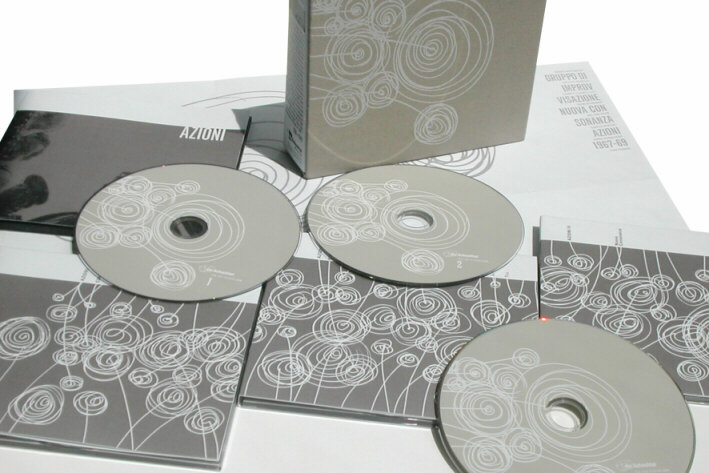
Gruppo di Improvvisazione Nuova Consonanza - Azioni

I've had Giraffe Kingdom on an unofficial, temporary hiatus for a few months now to pursue some other projects - namely, finishing my last quarter at college and recording an ambient album. I should graduate within the first week of June (yay), and the album is so far sounding nicer than I imagined it would, though it still needs a lot of work. Needless to say I am beyond excited to eventually unleash it here.

That said, I've been sad to let GK languish (again), and it's about time I post something fresh and exciting. To that end, here are two disk's worth of some of the most far out music I've ever come across, that of the Gruppo di Improvvisazione Nuova Consonanza. This was a group of free improvisers formed in the mid 1960s, which was unique in that every player was an accomplished composer as well as performer. The band, founded by Franco Evangelisti, had an "open" lineup and went through several mutations. Before a concert, the current members would meet daily to practice and define the scope of their musical language; on stage, the only rules were to listen to each other intently.

All of the members of the Gruppo di Improvvisazione were high art composers, and their music can be heard partly as reactionary against two of the dominant schools of élite music in their time - 12-tone/serial compositions following Schoenberg, Berg, & Webern, and aleatoric (chance based) works following John Cage. Arguably, their music is nothing other than aleatoric music with no plan whatsoever, but this extremely crude description does nothing to give readers any understanding of how the band actually sounded. Unfortunately, no words that come to my mind can really do that. Shocking? Provocative? Alien? Primitive? Futurist? Timeless? Ugly? Beautiful? One thing's for sure: it ain't jazz.

This is absolutely essential listening for any fan of the notion of free improvisation, from lovers of Keith Jarrett's Koln Concert to Anthony Braxton's For Alto to Supersilent, 1 through 9.

Did I mention that Ennio Morricone was the group's trumpet player? That's right, the composer of some of the most memorable film music ever scored (The Good, The Bad, and The Ugly) found time on the side to play in one of the most radical, fringe, niche bands that ever existed. And he was amazing in that context, too - another reflection of his genius.

Happily, the DVD that comes with this box set, featuring precious footage of the Gruppo in its prime, has found its way to YouTube. Find yourself an absolutely free hour, strive to forget all conceptions you hold about sound and music, and watch these. You won't be quite the same after.

http://www.youtube.com/watch?v=L3IuNV3dCWY
http://www.youtube.com/watch#!v=P1S6WsvfI6w&feature=related
http://www.youtube.com/watch#!v=QRuY0Q7KVzc&feature=related
http://www.youtube.com/watch#!v=aF8hqcLUf2Y&feature=related
http://www.youtube.com/watch#!v=wCFyyGeCCRo&feature=related

Track info:

Disk 1 personnel for all tracks:
Mario Bertoncini
Walter Branchi
Franco Evangelisti
John Heineman
Egisto Macchi
Ennio Morricone

1. "Kate" (7:09)
2. "Es War Einmal" (25:49)
3. Untitled (18:23)

Disk 2

1. "Fili" (14:02)
w/ Branchi, Bertoncini, Evangelisti, Heineman
2. "Concreto" (13:29)
w/ Branchi, Bertoncini, Evangelisti, Heineman
3. "A5-3" (8:01)
w/ Bertoncini, Evangelisti, Kayn, Heineman, Morricone, Vandor
4. "Trix 3" (prove concerto '67) (4:37)
w/ Heineman, Morricone, Vandor
5. "Fili 2" (prove concerto '67) (11:11)
w/ Branchi, Bertoncini, Evangelisti, Kayn
6. "A7" (7:04)
w/ Branchi, Bertoncini, Evangelisti, Heineman, Kayne, Morricone, Vandor
7. "A5-4" (prove concerto '67) (4:28)
w/ Bertoncini, Evangelisti, Heineman, Kayn, Morricone, Vandor
8. "A7-2" (prove concerto '67) (8:01)
w/ Branchi, Bertoncini, Evangelisti, Heineman, Kayn, Morricone, Vandor
9. "Trio" (10:44)
w/ Branchi, Heineman, Vandor

Download Disk 1
Download Disk 2
Purchase the 2 CD + DVD box set Azioni from die Schachtel and you'll also get a fascinating booklet containing interviews with Gruppo members, and a poster.

Can't thank Dory enough for this thrilling music.

Sunday, February 21, 2010

Sam Rivers - Inspiration

Here's another challenging yet accessible modern jazz album I've been enjoying lately. Sam Rivers recorded this album with his avant garde big band, the Rivbea Orchestra, in 1999. At the time, Rivers was pushing 80 (he's now 86 and still going strong!), but the music he scored for this album, and his solos throughout it, are as adventurous and energetic as those of any young vanguard on the scene today. This shouldn't really come as a surprise, since Sam Rivers is one of the most experienced players alive, having recorded numerous free jazz masterpieces since the mid 1960s with high profile artists like Herbie Hancock, Dave Holland, Anthony Braxton, and etc.

Inspiration features daunting big band arrangements that alternate between extremely carefully written phrases and far-out improvised solos. Often the band really swings, but in a sort of bizarre disjointed way; I'm reminded of the experimental big band works of Mingus from albums like The Black Saint and The Sinner Lady and Let My Children Hear Music, but the playing on Inspiration is typically a lot less tuneful, and much more abstract, than those. Actually, the album is often quite tuneful and even downright beautiful (hear "Beatrice" and "Solace"), but it speaks a particular jazz dialect that's a little strange to the ears at first. The forms of the pieces elude my comprehension even after multiple listens; new ways of hearing the parts fit together continue to reveal themselves, and the range of expression achieved through the variation of band textures is amazing. Some of the tracks are very dissonant and fierce, which is to be expected given Rivers' discography full of pretty out there records, but the music on Inspiration is generally as accessible as, say, Contours (Blue Note 1965), a classic free jazz staple.

Besides Sam Rivers I'm not familiar with any of the players on this album, but they're all more than up to par to work with the master. There are too many cool trombone, trumpet and sax solos to count, and the rhythm section (consisting only of drums and bass) stays deep in the pocket from start to finish. There are also appearances from a flute (played by Rivers) and an electric guitar. Very exciting, expressive, cerebral, vigorous music. Residents of Orlando, FL are fortunate to have regular opportunities to see modern jazz's most accomplished octogenarian perform with this group and others.

Download
Purchase

Friday, February 19, 2010

Vijay Iyer Trio - Historicity

This is the first album I've heard by the amazing piano improviser Vijay Iyer (b. 1971), and also his most recently released. There seems to be a global, cross-genre trend going on with musicians fervently blazing trails toward the future of music, pushing genres further and further, exploring new territory - and this new release certainly displays this action in jazz. Somewhat interesting, then, that it's called Historicity -
"Historicity in philosophy is the underlying concept of history, or the intersection of teleology (the concept and study of progress and purpose) temporality (the concept of time) and historiography (semiotics and history of history). Varying conceptualizations of historicity emphasize linear progress or the repetition or modulation of past events." (Wikipedia)
Now, I'm not sure what all of that means, or exactly what Iyer is trying to say titling his album that, but I'm guessing it has something to do with the grand and vast tradition of jazz innovators before him, and the synthesis of their influences on his own playing, and how he has became a part of that tradition by cooking up something truly new in the process...or....

Okay, enough philosophical rambling. Here we have an album of three startlingly virtuosic and intelligent improvisers going crazy. The first album that springs to mind to compare this to is Gently Disturbed by the Avishai Cohen Trio, but their similarities are on the superficial side. Both feature piano trios in which all three players take on an equally important and expressive role. Both feature insane technicality, especially with rhythm, and both display near-constant improvisational genius and sensitive group interplay. But Gently Disturbed has Israeli melodies at its core, so the songs tend to have an epic and emotionally moving (sometimes sentimental) feel, and a deep sense of tradition. (By the way, Gently Disturbed is one of my very favorite albums on this blog).

Historicity as I hear it is all about modernity, intellectual muscle and sheer surprise. Vijay Iyer brings to mind acknowledged master improvisers like Keith Jarrett, Anthony Braxton and Cecil Taylor, but somehow manages to sound like none of them. He is some sort of relentless idea-machine; passage by passage his lines are constantly sliding into new contours and rhythmic patterns, expanding and contracting time, exploring every inch of the space conjured by the given piece. If heard totally on its own, I'm not sure all the piano music on Historicity could make sense, but Stephan Crump (bass) and Marcus Gilmore (drums) are the sort of players with that seemingly telepathic gift, who can not only keep up with Iyer, but reveal his abstract stream's unmistakable structure and form.

There are four Iyer originals here, and a number of intriguing covers, including Andrew Hill's "Smoke Stack" (check out Hill's great Blue Note album of the same name), Bernstein's "Somewhere" from West Side Story, Stevie Wonder's "Big Brother", and an awesome, hard rollicking rendition of "Galang" by M.I.A. (say what?? - yes!). All the covers are executed with total originality and wit, and some of them are very funky.

From what I've read, Iyer's previous albums have been fusions of jazz and world music. I'm interested to hear him in that context, but he sounds beyond amazing in this one, and I hope he continues to explore this kind of edgy, super creative modern jazz on future releases.

Download
Purchase

Thursday, July 30, 2009

Axolotl - Memory Theatre


It's high time Giraffe Kingdom goes live again. Axolotl is the free-form sound project of experimental violinist/vocalist Karl Bauer, as well as his collaborators William Sabiston and Brian Tester. Memory Theatre, released in 2007, is a compilation of several of their hard-to-find releases, with quite a wide variety of atmospheres and moods. But if you haven't heard those releases, Memory Theatre will sound more like a unified album than a compilation, so it's the perfect introduction to the band. The music is extremely lush and evocative, bringing to my mind things like swarms of particles in Brownian motion, the frenzied yet precise movements of an ant colony, the boiling innards of a star, or a malfunctioning Tesla coil. Each piece is a wall of unfamiliar sounds, teeming with controlled chaos, never quite settling on any single idea, always subtlely evolving. At the same time there is a certain amount of stasis to each piece, in that a given song rarely strays particularly far from the texture it establishes at its beginning.

Aesthetically the pieces gracefully blend mechanical/technological sounds with those of a more organic/biological nature. For example, "Anamalon" bubbles with electric energy and prickly static over unsteady, wooden sounding thuds. This is followed by the gorgeous "Natura Naturans", which sounds like a field recording from some kind of magical forest with will-o'-the-wisps hanging in the air. Farfetched, perhaps, but this kind of music lends itself to such extravagant visual interpretations. Axolotl have put together a refreshing collection of sonic organisms, and aside from the last track (11 truly challenging minutes of noise) it is quite accessible, at least when approached with an open mind.

Download
Purchase

Friday, November 14, 2008

Keith Jarrett - The Carnegie Hall Concert


This concert was recorded in late 2005, but only released nearly a year later as a double album. It depicts Jarrett in top form, engaging in the purely improvised odysseys that made him famous. Fans of The Koln Concert, La Scala, and the Vienna Concert have surprises in store regarding the format of this solo date; for after returning to live performance after years of battle with chronic fatigue syndrome, Jarrett found he no longer had the stamina required for 40+ minute sojourns into the limits of his and the piano's capabilities. Now he conducts his improvisations as a series of shorts ranging from 3 to 10 minutes, where each vignette is directly influenced by the one preceding it (the opening improvisation is very abstract indeed). Much of the music here is dense and challenging, but it is also endlessly rewarding, as repeated listens reveal great depth and deliberation in his stream-of-conscious playing. After 10 of these miniature marvels, Jarrett closes the set with a superb encore of 5 standards, including his own compositions "Paint My Heart Red" and "My Song". Another fantastic look at arguably the greatest living genius of jazz piano.

Download Part 1
Download Part 2
Purchase New for $15.49

Sunday, November 2, 2008

Alog - Duck-Rabbit


"Norwegian duo Alog's second CD is "As Complicated and as Beautiful as Always," to quote one of the track titles. The rich constructions of samples and real instruments, both reassembled on the computer after the initial improvisations, continue to challenge the mind, but this time around the duo has shifted its focus. While 1999's Red Shift Swing showed a strange but definite filiation with jazz (both free and lounge, go figure), Duck-Rabbit is an ersatz distillation of pop and techno. The album title itself illustrates the kind of Frankenstein-inspired surgery that Espen Sommer Eide and Dag-Are Haugen accomplish. The important thing is that the resulting creature lives. The danger was to fall into a recipe, something Alog cleverly avoided by varying its inspirations and sources. The music itself sounds just a bit less convincing, or maybe it is only because it requires a little more effort from the listener. Highlights include "Violence and Magical Danger" (nice voice samples providing a chilling effect), the title track, and "Idea-Changing Liquid Alchemy," the latter being one of the group's easiest tracks but also a very successful one. The closing "Drunk DJs" represents the biggest surprise: an acoustic guitar duet, the antithesis of everything that came before. What's even more surprising is that one can only agree this was the best way to end Duck-Rabbit. " - Francois Couture, AMG

Download

Monday, September 1, 2008

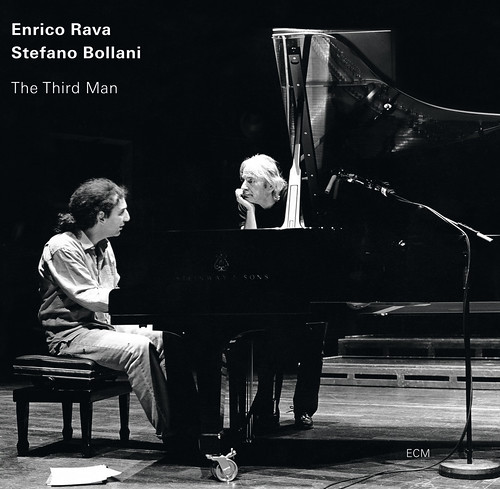
Enrico Rava/Stefano Bollani - "The Third Man"


From AMG:

While
The Third Man is a skeletal, live-in-the-studio duo recording between pianist Stefano Bollanni and Italian treasure, trumpeter Enrico Rava, its sound moves far beyond the intimacy that such a pairing would normally warrant. Bollani and Rava have been playing together for over a decade, and these 12 pieces reflect the deep communication that exists as a result of that working relationship. According to Bollani, they have worked as a duo in concert settings before and on record, but never like this. What this means is that both the recording studio -- the Auditorio Radio Svizzera in Lugano, Italy, and Manfred Eicher's recording process for ECM that allows recording without headphones in direct communication -- played a unique and powerful role, as well as an informative one in the process of making the record. The title of the disc references Eicher as a collaborator, as well as referring good-naturedly to Orson Welles and the film noir tradition. Rava composed six of the album's tracks, Bollani one, and the pair freely improvised the hauntingly beautiful and melodically compelling title cut. There are all sorts of nods here. For openers, there's Bruno Martino's "Estate," a Neapolitan folk song, which was extrapolated upon by Antonio Carlos Jobim for "Retrato Em Branco y Preto." The original plus two versions of the Jobim tune are here. This track and its evolution marks passage through the set at beginning, middle, and the final variant, right near the end. Then there is the magnificently tender reading of "Felipe," by one of Brazil's greatest composers, Moacir Santos. (Check out his Blue Note sides, which are available as inexpensive imports from Europe at good online retailers.) Its open, reverie-like character is brought into the present by Rava's deeply expressive take on the melody, as Bollani offers augmented chords that enhance and deepen it. When he takes his solo, he uses the melody as a way inside the character of the tune, making it a bittersweet cavern of memory. "Cumpari," by Rava, is a fine and strangely complex lyrical approach to modern composition. The contrapuntal pianism of Bollani as he uses three different scalar approaches to the motifs in the structure nod to everyone from Stravinsky, Bartok, and even Lutoslawski, but they echo Bernard Hermann, Umiliani and Morricone, as well. Rava engages a more dimensional and textural approach in his solo, where he adds vanguard and modal jazz to the mix. This is the only "remotely" outside thing here. At just under five minutes, it is still a delight, and melds well with the more deeply and consciously melodic pieces here. It's a wonder that "The Third Man" is so near the beginning, because it is arguably the best thing here. That said, it doesn't detract from the rest as much as it provides an aural view into the deeply conversational and historically rich sound world being so poetically explored between this pair. While it's also true that it is indeed the Italians who have put such a lyrical, emotionally honest stamp on jazz since the '60s and are indeed involved in a tremendous period of creativity with it since the '70s that shows no sign of slowing down (no matter which subgenre of the music being made), these two are among its most expressive and communicative, making them ambassadors. The Third Man is a brilliant collaboration and a beautifully accessible as well as adventurous offering.

Try it
Buy from Amazon.com