Thanks so much to the Giraffe King (aka artist extraordinaire Niv Bavarsky) for producing this beautiful illustration for the cover of A Leap Across A Chasm. If you don't know what that is, well, please read the post directly below this one, or simply click here.
Huge thanks to the blogs Curious!, Origami, and - for these kind words:
In related news, a year ago today Danielle Baquet-Long passed away. I know I'm not the only one out there who, despite never knowing her, has been profoundly changed by her singular aesthetic approach and appreciation of life and love. Rest in peace.
Obviously reviewing my own album would be a bit ridiculous, but I'll write a few words about it here just to give people a sense of what I was going for. Since I discovered Shuttle 358 sometime in late 2007, I have been totally compelled and fascinated by the notion of ambient music. My interest in the genre stems from its versatility of purpose, its diversity of sound timbres and song structures, and its unrivaled capacity for sheer beauty.
At the beginning of my last quarter at UCSB a few months ago I started feeling really nostalgic and sentimental. Reflecting on the past four years at that place, it became clear to me that I had to make some sort of sonic tribute that would keep me from forgetting the sounds and feelings I associate with the school. Simultaneously, I was falling more and more in love with the music of Celer, two of whose albums I reviewed here in February, and I also wanted my album to pay homage to them.
About six weeks ago, when the album was around 75% done, I read online that Dani Baquet-Long of Celer (rest in peace) actually attended UCSB, and graduated two years before I enrolled. This came as a genuine shock given my internal reasons for starting this project. My final month at school was colored by the haunting realization that the two subjects I was honoring in music are actually inextricably connected. I wonder, is there something in the water at UCSB that drives people to the shelter of warm drones and subtle hums?
For the music, I combined field recordings from various locations around UCSB, including its beautiful lagoon, its nearby beaches, and on campus. On top of these raw recordings I added drony tones generated from piano, flute, voice, glockenspiel, guitar, and other instruments with a lot of reverb added. The harmonies employed are influenced by jazz and 20th century composition, especially Bill Evans and Toru Takemitsu.
Anyway, I hope I've gotten across that this has been an extremely personal endeavor. Very very big thanks go to Sarah, Daniel, Niv and Sepehr, who all made invaluable critical suggestions and creative contributions to the project. I'm currently working with Niv on getting artwork made and turning this into a physical package, but for now, I hope you enjoy it as a high quality digital download.
One last thing. It would be supreme hypocrisy if I made payment for this album mandatory. Hell, just look around this blog. So listeners at the bandcamp page have the option to download A Leap Across A Chasm for free or else make a donation. I'm not expecting to make much for this, but anything is a world of help for a recent college graduate that didn't land a mega job.
Please share this with anyone you can think of interested in independent art music!
More frequent reviews on Giraffe Kingdom incoming!
I've had Giraffe Kingdom on an unofficial, temporary hiatus for a few months now to pursue some other projects - namely, finishing my last quarter at college and recording an ambient album. I should graduate within the first week of June (yay), and the album is so far sounding nicer than I imagined it would, though it still needs a lot of work. Needless to say I am beyond excited to eventually unleash it here.
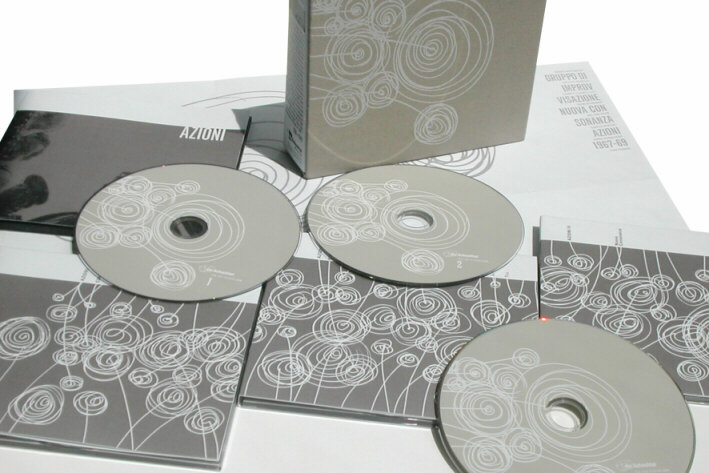
That said, I've been sad to let GK languish (again), and it's about time I post something fresh and exciting. To that end, here are two disk's worth of some of the most far out music I've ever come across, that of the Gruppo di Improvvisazione Nuova Consonanza. This was a group of free improvisers formed in the mid 1960s, which was unique in that every player was an accomplished composer as well as performer. The band, founded by Franco Evangelisti, had an "open" lineup and went through several mutations. Before a concert, the current members would meet daily to practice and define the scope of their musical language; on stage, the only rules were to listen to each other intently.
All of the members of the Gruppo di Improvvisazione were high art composers, and their music can be heard partly as reactionary against two of the dominant schools of élite music in their time - 12-tone/serial compositions following Schoenberg, Berg, & Webern, and aleatoric (chance based) works following John Cage. Arguably, their music is nothing other than aleatoric music with no plan whatsoever, but this extremely crude description does nothing to give readers any understanding of how the band actually sounded. Unfortunately, no words that come to my mind can really do that. Shocking? Provocative? Alien? Primitive? Futurist? Timeless? Ugly? Beautiful? One thing's for sure: it ain't jazz.
This is absolutely essential listening for any fan of the notion of free improvisation, from lovers of Keith Jarrett's Koln Concert to Anthony Braxton's For Alto to Supersilent, 1 through 9.
Did I mention that Ennio Morricone was the group's trumpet player? That's right, the composer of some of the most memorable film music ever scored (The Good, The Bad, and The Ugly) found time on the side to play in one of the most radical, fringe, niche bands that ever existed. And he was amazing in that context, too - another reflection of his genius.
Happily, the DVD that comes with this box set, featuring precious footage of the Gruppo in its prime, has found its way to YouTube. Find yourself an absolutely free hour, strive to forget all conceptions you hold about sound and music, and watch these. You won't be quite the same after.
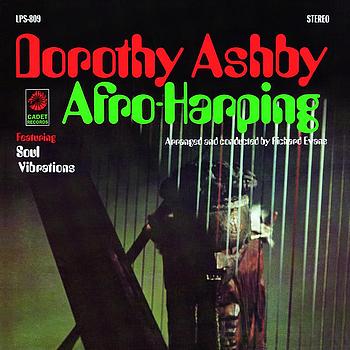
This is one of my favorite jazz albums of all time. It's pretty amazing that it was possible to hear music like this in 1968 - in many ways its aesthetics anticipate hip hop. Listen to the opening track "Soul Vibrations" with its deep funk bass line, psychedelic theremin melodies, and Isaac Hayes style string arrangements (earlier than Hayes wrote his) and tell me it isn't perfect material for a Dilla-style chopped up arrangement. This remarkable album features the near-peerless jazz harp master Dorothy Ashby (1932-86) with an anonymous band including flute, strings, vibes, organ and many other instruments, playing a set of jazz standards in a Latin/Pan-African style. Pretty much no other jazz group I know of sounded like this in the late '60s (this is nothing like Miles Davis' fusion work at the time), though by the '70s many bands were working in a similar style featuring laid back grooviness, catchy, soulful hooks, and rhythms borrowing equally from African music and funk. There isn't a walking bass line to be found, only pure earthy grooves in short repetitive figures.
Dorothy Ashby wasn't the first jazz harpist, but she was one of only a few that achieved fame, and she was undoubtedly the most innovative. Albums like In a Minor Groove (1958) demonstrate her prowess in bebop, sounding as deft and nimble on her enormous harp as a jazz guitarist, but producing a fuller and more magical sound. Then there's The Rubaiyat Of Dorothy Ashby (1970), which is to Dorothy Ashby's discography what Ys is to today's star harpist Joanna Newsom's - it's an incredibly ambitious, sprawling masterpiece, unprecedented upon its release, with lush arrangements, multiple genres (jazz, funk, East Asian, Indian, and African traditional) crammed into one, and even singing and spoken word from Dorothy.
Afro-Harping isn't nearly so grandiose as that, but in my opinion it is her best album. Her improvisations throughout the album are very lyrical and memorable, taking a purposeful, less-is-more approach to soloing not unlike the playing of Grant Green, but more chordal and less linear. Not a single moment falls flat. The whole band gels beautifully throughout, and the percussion will have you tapping your lap. Their hybridization of funk, soul, bebop, and modal and Latin jazz makes perfect sense and still sounds fresh today, and the album at a scant 35 minutes seems to have infinite replayability. This comes with just about my highest possible recommendation; music that just makes you feel good.
Winner of Scribble Jam '07, dynamic host of the world-famous Low End Theory club in LA, and slaughterer of hundreds of would-be battlers, NoCanDo is going places. Scratch that actually, because his debut Jimmy the Lock on Alpha Pup proves that he's arrived. It's easy to see why a record like this is a formula for success: it combines equal parts unpretentious, fun party themes (this is a sex, drugs and rock 'n roll record, says NoCanDo), high-brow social commentary executed with undeniable poetic skill, and cutting-edge future production and scratches from an LA all-star roster including Nosaj Thing, DJ Nobody, Thavius Beck, Daedelus, Free The Robots, Maestroe, the Gaslamp Killer and D-Styles.
This is the first release I've heard out of the cerebral LA underground hip hop scene that I think has real potential to break through to a wider audience, especially thanks to great singles like the club-shaker "Hurry Up And Wait". With sparse, ultra-bassy production from DJ Nobody and all too many killer lines ("Man, I'm as cold as they come / If I was holdin' a gun, I'd shoot a hole in the sun"; "If I keep rushin' man I could be called a Communist / I break speed limits and laws and all my promises"), there's no reason this song can't be 2010's "A Millie". At the end of the track, NoCanDo suddenly breaks into double-time, and closes the incendiary stanza with the non-rhetorical question "When did all the passion leave?!" This is mainstream-sensible rap with real passion.
Another highlight comes toward the end of the album with "Skankophelia", a hilarious and clever twist on the obligatory girl-tribute track with sparkling clean Daedelus production (sampling Curtis Mayfield's "Makings of You" - classic!). NoCanDo's flow on this track is refreshing in how it features some nice sized rests and changes of scansion rather than the more typical approach of a constant stream of syllables. "Lady, gimme a update for fuck's sake / You're so precious; it's no fetish / Your whole essence is pro- / -fessional whore; I'm head over heels, no question / I suffer from a bad case of skankophelia." Though this track displays it best, NoCanDo's flow is anything but monotonous throughout the album.
Other tracks expose the less glamorous sides of Los Angeles, revealing, critiquing, and at times reveling in its grimy and morally questionable underbelly, full of "Blue collars / Bright lights / Brown skies / And bullshit" (hook to the burner "Exploits and Glitches"). Tackling issues like drunk driving, promiscuity and unprotected sex, race, sexuality and California's passing of Prop. 8, drug abuse, and street violence, Jimmy the Lock has a lot of legitimate and intelligent content without ever sacrificing fun, character and attitude. Also, there isn't one skit on the entire album.
Likely to be one of the most talked about underground rap releases of the year, NoCanDo's major studio debut has, pound for pound, more brains, swagger, and neck breaking beats than just about anyone can shake a mic at.
Cursory Asperses and In Escaping Lakes are two exquisite, related albums by Celer, one of the finest and most prolific ambient/drone/minimalist groups to ever grace the earth, though tragically they did for only a few short years. From their formation in 2005 to their sudden end in the summer of 2009, Celer recorded no fewer than 30 full length albums, and this is a modest lower bound. The astonishing thing is that I haven't yet heard one that isn't an honest to god masterpiece.
Last summer, s of - introduced me to Celer via their album Capri, at the time their most recent release. I was just beginning to get deeply into the Texas duo Stars of the Lid, who today remain one of the best and most widely known drone groups; s had made some lofty claims that Celer are the genre's best kept secret, with albums outclassing even SotL's best. Capri impressed me immediately, and within a few weeks I was beginning to get seriously attached to it. Then, disaster, with the passing away of Danielle Baquet-Long and the consequent dissolving of Celer.
Since then I've done some exploring of the band's discography, and one thing I've found is that Capri is something of an anomaly. It consists of 29 tracks, most of which are shorter than 3 minutes, and only one of which exceeds 5. In a sense it's almost the ambient equivalent of a hip hop beat tape, like the recently blogged about Rap Beats Vol.1 by Samiyam. While Capri is an extremely enjoyable listen, I'm of the opinion that Celer's long form drone pieces, which are much more numerous in their catalog than albums like Capri, are even more sublime, because they allow much more time for the pieces to breathe and develop.Cursory Asperses and In Escaping Lakes are two of these.
These works are easy enough to describe superficially. The hard part, which might be impossibly hard, is capturing in words what really makes them special. Very subdued, ambient drones float, in stasis, with hardly any sense of time. Except, they don't quite stay in the same place...they ebb, they pulse in long graceful arcs. Saturation levels in the drones shift in gentle grades. Here a higher frequency cuts in for a few moments and dies away; there a deep rumble of bass moves shadowy just at the threshold of perception. Listen to any 10 second long sample of the piece, and it sounds like nothing is happening, and yet after a few minutes of listening it's really hard to tell if we're basically in the same place, musically, as before. That's because we're often not - these pieces aren't loop based, but are really organically changing over the course of their long durations. Cursory Asperses is just under an hour, and In Escaping Lakes is about 40 minutes long, and so far their structures have been too subtle for me to understand in conventional terms like ABAC or ABCD and the like. The pieces do have distinct movements, but they blend into each other so finely that borders are nearly impossible to reckon. Learning to detect and make sense of the paths these pieces follow is part of the joy of listening to them.
Of course, with sounds this good, it isn't really necessary to worry about or even give a thought to form. It's all too easy to put this on and just soak in the beauty, preferably while lying down with the lights off. Cursory Asperses features field recordings from around a stream, among other instruments with so much reverb applied you can't tell what they are, and sounds light, open, and cool. The drones are sinuous, slow and searching, like calm streams branching off a central river represented by the more bass-heavy tones. In Escaping Lakes is the sequel, and it has a lot more bass; play it after Cursory Asperses and the effect is like a slow plunge into still, cold depths.
Cursory Asperses is a series of pieces based around the single concept of slow movement. Throughout the process of composing and mixing, we kept in mind, and based everything on the form of certain field recordings, made at an isolated stream in the woods, of the slow trickle of the water, and of laundry hanging on cords in the backyard, flapping softly in the wind. While combining these field recordings with recordings of instruments, we mixed them into a more whole form of slow movement, with delicate, thin layers, but which we also intend to display our ideas interpreting the soft nature of Slow Flow. (Slow Flow)
In Escaping Lakes is the sequel to Cursory Asperses, previously released on Slow Flow. Where Cursory Asperses focused on the slow movement primarily of streams, and other field recordings, In Escaping Lakes continues this pathway to expand into a deeper subject, of lakes and their surroundings. Inspired by a painting by Anthony Feyer, In Escaping Lakes was made to demonstrate enclosure, depth, and closeness in still places. (Fluid Radio)
Fans of Celer still have 20 or more unreleased albums to look forward to. They have been coming out like hot cakes, and all of them are amazing.
Download Cursory Asperses (apologies for the low bit rate, but this still sounds great). This album seems to be out of print.
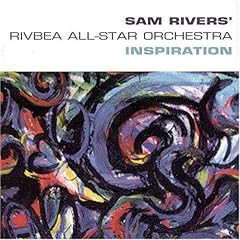
Here's another challenging yet accessible modern jazz album I've been enjoying lately. Sam Rivers recorded this album with his avant garde big band, the Rivbea Orchestra, in 1999. At the time, Rivers was pushing 80 (he's now 86 and still going strong!), but the music he scored for this album, and his solos throughout it, are as adventurous and energetic as those of any young vanguard on the scene today. This shouldn't really come as a surprise, since Sam Rivers is one of the most experienced players alive, having recorded numerous free jazz masterpieces since the mid 1960s with high profile artists like Herbie Hancock, Dave Holland, Anthony Braxton, and etc.
Inspiration features daunting big band arrangements that alternate between extremely carefully written phrases and far-out improvised solos. Often the band really swings, but in a sort of bizarre disjointed way; I'm reminded of the experimental big band works of Mingus from albums like The Black Saint and The Sinner Lady and Let My Children Hear Music, but the playing on Inspiration is typically a lot less tuneful, and much more abstract, than those. Actually, the album is often quite tuneful and even downright beautiful (hear "Beatrice" and "Solace"), but it speaks a particular jazz dialect that's a little strange to the ears at first. The forms of the pieces elude my comprehension even after multiple listens; new ways of hearing the parts fit together continue to reveal themselves, and the range of expression achieved through the variation of band textures is amazing. Some of the tracks are very dissonant and fierce, which is to be expected given Rivers' discography full of pretty out there records, but the music on Inspiration is generally as accessible as, say, Contours (Blue Note 1965), a classic free jazz staple.
Besides Sam Rivers I'm not familiar with any of the players on this album, but they're all more than up to par to work with the master. There are too many cool trombone, trumpet and sax solos to count, and the rhythm section (consisting only of drums and bass) stays deep in the pocket from start to finish. There are also appearances from a flute (played by Rivers) and an electric guitar. Very exciting, expressive, cerebral, vigorous music. Residents of Orlando, FL are fortunate to have regular opportunities to see modern jazz's most accomplished octogenarian perform with this group and others.
Artists, send any requests for the removal of album download links to TheSoftWatch@gmail.com and I will do so immediately. Note that no albums are hosted on Giraffe Kingdom, and the links are only shortcuts that anybody could find elsewhere with a little work. We believe from the heart that online media sharing ultimately benefits artists.
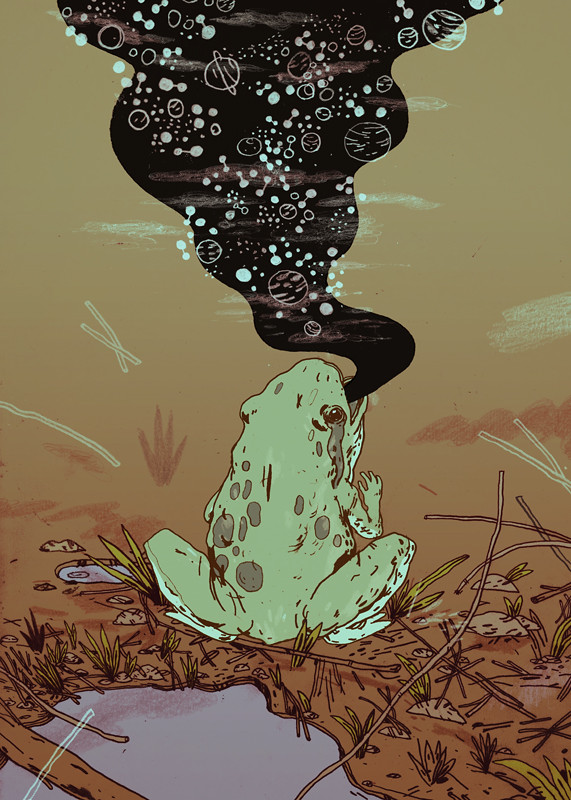 Thanks so much to the Giraffe King (aka artist extraordinaire Niv Bavarsky) for producing this beautiful illustration for the cover of A Leap Across A Chasm. If you don't know what that is, well, please read the post directly below this one, or simply click here.