Showing posts with label 20th century composition. Show all posts

Tuesday, October 13, 2009

Toru Takemitsu - Complete Takemitsu Edition 2: Instrumental and Choral Works (11 Disks)

I just found out that 5 days ago was the late Toru Takemitsu's 79th birthday, so here's a belated dedication and celebration post. I bring you quite a large collection of instrumental and choral works by the visionary man Wikipedia documents as Japan's first international composer:
In the late 1950s chance brought Takemitsu international attention: his Requiem for string orchestra (1957 Takemitsu requiem.ogg listen ) was heard by Igor Stravinsky in 1958 during his visit to Japan. (The NHK had organised opportunities for Stravinsky to listen to some of the latest Japanese music; when Takemitsu's work was put on by mistake, Stravinsky insisted on hearing it to the end.) At a press conference later, Stravinsky expressed his admiration for the work, praising its "sincerity" and "passionate" writing.[14] Stravinsky subsequently invited Takemitsu to lunch; and for Takemitsu this was an "unforgettable" experience.[15] After Stravinsky returned to the U.S., Takemitsu soon received a commission for a new work from the Koussevitsky Foundation which, he assumed, had come as a suggestion from Stravinsky to Aaron Copland.[15] For this he composed Dorian Horizon, (1966), which was premièred by the San Francisco Symphony Orchestra, conducted by Copland.
Takemitsu later became a close personal friend of John Cage, who encouraged him to embrace his nation's musical traditions for the first time, leading to a new stylistic period combining ancient Japanese and Western avant garde ideas. At the same time, Toru was also highly conscious of Western popular music, as evidenced by his many guitar transcriptions of Beatles and jazz songs.

This collection is actually the second installment of an even larger group of recordings of Takemitsu's music, called the Complete Takemitsu Edition. From what I can tell, Edition 1 consists of his orchestral works, Editions 3 and 4 cover his film works, and Edition 5 is made up of popular songs, tape, and theatre works. Supposedly the entire collection goes for around an absurd $1,000. Here's what we have on Edition 2, the instrumental and choral works:

Disk 1
1.Romance
2-3. Lento in Due Movimenti
4. Distance de Fee
5-7. Pause Ininterrompue
8-10. Le Son Calligraphie I, II, III
11. Masque
12. Landscape
13. Piano Distance
Download

Disk 2
1. Ring for flute, terz guitar and lute
2. Corona for one or more pianists
3. Sacrifice for alto flute, lute and vibraphone with antique cymbals
4. Sonant for 2 flutes, violin, violoncello, guitar and 2 bandoneons
5. Hika for violin and piano
6. Eclipse for biwa and shakuhachi
7. Cross Talk for 2 bandoneons and tape music
Download

Disk 3
1. Stanza I
2. Valeria
3. Seasons
4. Munari by Munari
5. Voice
6. Eucalypts II
7. Stanza II
Download

Disk 4
1. Distance for oboe with or without sho
2. For Away for piano
3. Voyage for biwa
4. Garden Rain for brass ensemble
5-7. Folios for guitar
Download

Disk 5
1. Bryce
2. Waves
3. Quatrain 2
4. Waterways
5. Les yeux clos
6. Les yeux clos II
Download

Disk 6
1. A Way a Lone for string quartet
2-4. Toward the Sea for alto flute and guitar
5. Rain Tree for 3 percussion players
6. Rain Spell for flute, clarinet, harp, piano and vibraphone
7. Rain Tree Sketch I for piano
8. Rain Tree Sketch II, In Memoriam Olivier Messiaen for piano
Download

Disk 7
1. Cross Hatch for marimba and vibraphone
2. Rocking Mirror Daybreak I, Autumn for violin duo
3. Rocking Mirror Daybreak II, Passing Bird for violin duo
4. Rocking Mirror Daybreak III, In The Shadows for violin duo
5. Rocking Mirror Daybreak IV, Rocking Mirror for violin duo
6. From far beyond the Chrysanthemums and November Fog for violin and piano
7. Orion for violoncello and piano
8. Entre-temps for oboe and string quartet
9. Rain Dreaming for cembalo
Download

Disk 8
1. Signals from Heaven I, Day Signal
2. Signals from Heaven II, Night Signal
3. All in Twilight I for guitar
4. All in Twilight II for guitar
5. All in Twilight III for guitar
6. All in Twilight IV for guitar
7. Toward the Sea III Part I for alto flute and harp
8. Toward the Sea III Part II for alto flute and harp
9. Toward the Sea III Part III for alto flute and harp
10 Itinerant, In Memory Of Isamu Nogutchi for flute
11. Litany I, In Memory Of Michael Vyner for piano
12. Litany II, In Memory Of Michael Vyner for piano
13. A piece for guitar For The 60th Birthday of Sylvano Bussotti
14. And then I knew 'twas the Wind for flute, viola and harp
Download

Disk 9
1. Equinox
2. Between Tides
3. Paths
4. A Bird came down the Walk
5. In the Woods I
6. In the Woods II
7. In the Woods III
8. Air
Download

Disk 10
1. Bad Boy for 2 or 3 guitars
2-3. Piano Pieces for Children
4. A Boy Name Hiroshima for 2 guitars
5. Le Fils des Etoiles for flute and harp
6-17. 12 songs for guitar
18. The Last Waltz for guitar
19. Golden Slumbers for piano
20. Herbstlied for clarinet and string quartet
Download

Disk 11
1. Wind Horse I
2. Wind Horse II
3. Wind Horse III
4. Wind Horse IV
5. Wind Horse V
6. Grass
7. Handmade Proverbs I
8. Handmade Proverbs II
9. Handmade Proverbs III
10. Handmade Proverbs IV
11-22. Songs for mixed chorus
Download

There are too many excellent pieces here to really name highlights, but I'm particularly fond of the Piano Pieces for Children, Toward the Sea for alto flute and harp, the guitar songs, and the astoundingly gorgeous songs for mixed chorus, which to me almost sound like otherworldly slave spirituals.

Complete Takemitsu Edition website (Japanese)

Friday, August 21, 2009

Alexander Scriabin - The Poem of Ecstasy, Piano Concerto in F# minor, Prometheus


One of many composers who blurred the line between genius and lunacy, Alexander Scriabin created some of the most ambitious, complex, and downright orgasmic music of his time or any. The pieces on this recording, especially the Poem of Ecstasy and Prometheus (also called the Poem of Fire), surge and seethe with emotions both primal and highly refined. Scriabin (1872 - 1915) was a piano virtuoso, maverick composer, synaesthete (his perceptions of sounds and colors were intrinsically linked), and mystic. To get an idea of how mystical Scriabin could be, take for example that for the last dozen years of his life he toiled on a massive, multi-media project to be performed in the Himalayas, which Scriabin hoped would usher in the armaggedon and replace mankind with "nobler beings". The work, called Mysterium, would have been "a grandiose religious synthesis of all arts which would herald the birth of a new world" - unfortunately, it was never completed.

While the pieces on this album aren't quite as ambitious as that, they are nonetheless tremendous musical achievements, so grandiose and sensational as to make Wagner's most dramatic pieces seem docile by comparison. Pierre Boulez brings the Chicago Symphony Orchestra to seismic levels of intensity as they explore Scriabin's bizarre universe of exotic and ecstatic harmonies. According to Wikipedia, the Poem of Ecstasy combines two aesthetic principles Scriabin upheld: that music is the most highly evolved of the human arts, and that ecstasy is the most highly evolved of the human emotions. Novelist Henry Miller evidently thought very highly of the piece, writing
"That Poème de l'extase? Put it on loud. His music sounds like I think - sometimes. Has that far-off cosmic itch. Divinely fouled up. All fire and air. The first time I heard it I played it over and over. (...) It was like a bath of ice, cocaine and rainbows. For weeks I went about in a trance. Something had happened to me."
The Poem of Fire, if anything, is an even greater musical spectacle, calling for an enormous orchestra and vocal chorus, as well as a one-of-a-kind instrument called the clavier à lumières, a kind of organ/light-projector that would bathe the concert hall in color and sound. The music is somewhat more difficult than in the Poem of Ecstasy, making heavy use of Scriabin's dissonant "Prometheus chord" consisting of the pitches C, F♯, B♭, E, A, and D in various inversions. The climax of the piece sounds like a choir of angels singing the world to its end.

Sandwiched between those cataclysmic symphonic works is Scriabin's piano concerto in F# minor, an earlier work that displays the composer's love of Chopin. This is the most accessible piece on the album, lush, tender, delicate, and emotionally satisfying. It could be classified as post-Romantic, being strongly lyrical and expressive while exploring richer harmonies and more daring dissonances than was typical of the Romantic style. The first few achingly lovely minutes of the Andante movement sound like the work of a completely different composer than the Poems. However, the same movement features some very dark and abstract passages, and in general this concerto hints at the extremes Scriabin would take his music to in the last 15 years of his life.

Wikipedia reports that Scriabin was a life-long hypochondriac, and in 1915 he passed away from sepsis contracted from a shaving cut or lip boil.

Download
Buy

Tuesday, April 21, 2009

Kronos Quartet and Wu Man - Tan Dun: Ghost Opera


Most Westerners familiar with Tan Dun, China's most prominent composer, know him through his Academy Award winning score for "Crouching Tiger, Hidden Dragon", or through his works commissioned for the 2008 Beijing Olympics. Fewer are likely to have heard his more personal and artistically adventurous works, which bridge Eastern and Western traditions while exploring a musical language of Tan Dun's very own. One of the most fascinating of these is Ghost Opera, which puts a (post)modernist spin on an ancient and somewhat polarizing genre - the Chinese opera.

Commissioned in 1994 for the Kronos Quartet and pipa player Wu Man, the five movement Ghost Opera is fairly short (35 minutes) but packed with challenging material that will defy any listener's expectations. Opening the first movement is the sound of water splashing in a great glass bowl, followed by a beautiful and haunting quotation of Bach's C# minor prelude from The Well-Tempered Clavier, Book 2. Just as we're beginning to get comfortable, a shrill note in the upper register of the violin rudely interrupts the serene Bach, and the chilling voice of a monk spirit enters the act. Things move quickly now from strange to bizarre, as a variety of male and female spirit-voices shout wordless incantations over abstract and menacing string gestures. The second movement begins as a high energy dance, with driving string parts and more shouting from the spirits, but in the end winds up showcasing Wu Man's virtuosic pipa skills over a bare texture. The third movement, lacking vocalizations, blends the Bach heard previously with a Chinese folk song, "Little Cabbage", to gorgeous effect. Its sheer melodic accessibility is countered by the next movement, which is almost totally rhythmic, featuring unsteady percussion on a variety of stones and metallic cymbals, and later, percussive string strumming. As the piece mounts in intensity, the spirits return with more excited clammoring than ever, and ultimately a gong hit marks the beginning of the final movement, the most understated and "ghostly" one of them all.

Tan Dun notes:
"My whole village was crazy. We had a professional crying team available for hire at funerals and deaths...a shamanistic choir to set the mournful tone. In Hunan, where I grew up, people believed they would be rewarded after death for their sufferings. Death was the "white happiness," and musical rituals launched the spirit into the territory of the new life. Instruments were improvised: pots and pans, kitchen tools, and bells. The celebration of the remote was grounded in everyday life.

The tradition of the "ghost opera" is thousands of years old. The performer of "ghost opera" has a dialogue with his past and future life — a dialogue between past and future, spirit and nature."
As stated before, Chinese opera is a polarizing genre. Many people find it difficult to appreciate, and attendence to live performances has been on the decline since the second half of the 20th century (see the Wikipedia entry on Beijing Opera). Ghost Opera, aside from being a rumination on modern spirituality, is an attempt to rejuvenate this unusual and uniquely beautiful art form.

Download
Purchase

Sunday, March 29, 2009

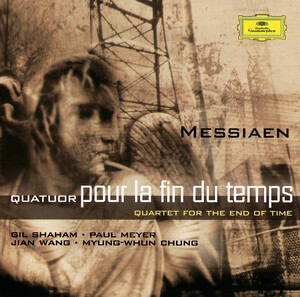
Shaham, Meyer, Wang & Chung - Messiaen: Quartet for the End of Time

One of the most proclaimed chamber works of the last century, it is widely known that Olivier Messiaen's "Quartet for the End of Time" (for violin, clarinet, cello, and piano) was conceived and composed within the Nazi prison camp Stalag VIII A. Given this, and the fact that Messiaen was already at the forefront of musical exploration before his wartime captivity, one could reasonably presume the Quartet is heavy, discordant, and menacing. This is indeed the case at times, but it's impossible to summarize the whole piece so quickly and easily - Messiaen's fascination with bird songs, modal melodies, supernatural or "heavenly" harmonies, rhythmic augmentation and diminution, eternity, infinity, and Catholic mysticism is in full effect throughout the composition.

Particularly striking to the author is the third movement, for clarinet alone, which lasts nearly 9 minutes and features incredibly elegant and lyrical phrasing, achieving as much expression with elongated notes as with empty rests. Etienne Pasquier, cellist among the original four performers of the Quartet, sheds light on the history of this movement in an interview reproduced in the liner notes:
Among our comrades was a clarinettist who was a member of the Orchestre National and who had been allowed to keep his clarinet. Messiaen started to write a piece for him while we were still in this field [where prisoners were held] as he was the only person there with an instrument. None of us had a violin or a cello or a piano. And so Messiaen wrote a piece for clarinet that was later to become the third movement of the Quatuor pour la fin du temps: Abîme des oiseaux (Abyss of the birds). Henri Akoka, the clarinettist, practised in the open field and I acted as his music stand. The piece seemed to him to be too difficult from a technical point of view and he complained about it to Messiaen. "You'll manage," was Messiaen's only reply.
The same interview contains many other fascinating anecdotes, including that the camp directors at Stalag VIII A constituted the front row of the audience at the very successful premier performance, and that Messiaen and his fellow performers were given preferential treatment as "musician soldiers" and released four years before the rest of the prisoners.

Other highlights include the fiery, rhythmically complex sixth movement ("Dance of frenzy for the seven trumpets") and the heartbreaking eighth and final movement ("Eulogy to the Immortality of Jesus"), which according to Messiaen represents "the ascent of man towards his God, of the Child of God towards his Father, of the deified Being towards Paradise."

Each player on this recording is somewhat of a celebrity in the world of concert music, and followers of Giraffe Kingdom will already have a recording featuring Gil Shaham and Jian Wang paired together, namely on Brahms' "Double Concerto". Paul Meyer on the clarinet is as comfortable playing works by modernists like Penderecki and Berio as by giants of the Classical and Romantic eras. Rounding out the group, pianist Myung-Whun Chung is, like Shaham, a Deutsche Grammophon exclusive artist; no stranger to Messiaen's orchestral oevre, he is present on recordings of the Turangalîla Symphony, Éclairs sur l'au-delà (Illuminations on the Beyond), L'Ascension, and much more. This is his first recording of chamber work.

"This quartet is in eight movements. Why? Seven is the perfect number, the six days of Creation, sanctified by the Divine Sabbath; the seven of this rest is prolonged into eternity and becomes the eight of everlasting light, of eternal piece." - Olivier Messiaen

Download
Purchase

Friday, February 6, 2009

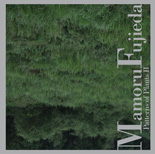
Mamoru Fujieda - Patterns of Plants I & II

Algorithmic music has a long history, and can roughly be defined as music produced through the use of rigid, deterministic procedures - the opposite of improvisation. This allows for a great deal of music to be considered at least partially algorithmic, such as 17th and 18th century counterpoint, 20th century dodecaphonism and serialism, and more generally any genre requiring a certain compositional scheme. The artistic maverick John Cage frequently used algorithmic methods, including in determining the rhythms for the recently blogged about "Sonatas and Interludes", but Cage was also largely concerned with free creative impulse. Iannis Xenakis worked with concepts from areas as diverse as pure mathematics, physics, game theory, chance, and architecture in composing his influential sound works.

Mamoru Fujieda (1955 -) generates beautiful, otherworldly music from an even less likely source: living plants. Fujieda attached sensitive electrodes to the leaves of various plants, measuring their subtlely changing electric potentials. This data was then translated by the composer's algorithms into six collections of music, each in a different tuning system, written for traditional Asian and Western Medieval instruments. Patterns of Plants was released on Tzadik Records in 1997, featuring a live chamber ensemble performing the pieces. In 2008 this was followed by Patterns of Plants II, containing five new collections with different instrumentation, notably including violin. On both albums, the music is startlingly emotive and accessible, whether or not consideration is given to how it was made. In fact, most listeners would probably never suspect this was not "composed" by a human being in the ordinary sense of the word, a fact which is very easy to forget while listening. Fujieda's blind processes resulted in something starkly beautiful, balanced, organic, and very close to the human heart.

Wednesday, January 28, 2009

Herbert Henck - John Cage's "Sonatas and Interludes"

A piano prepared for the Sonatas and Interludes (Wikipedia)

John Cage (1912 - 1992), though regarded by many academics as the most important American composer of the 20th century, has still not earned much widespread acceptance or even recognition from general audiences. Performances of his music are infrequent, and not from a lack of able and willing performers; regrettably, many casual listeners find his compositions musically senseless and absent of emotion. Steve Reich addresses this in an essay on John Cage (see Reich's Writings on Music), and suggests that his Sonatas and Interludes for prepared piano are among the few likely candidates for Cage pieces which could achieve lasting popularity.

This author agrees with Reich for the simple reason that the Sonatas and Interludes are catchy, a claim which no doubt will sound strange to anyone whose exposure to John Cage is limited to 4'33". The set, written prior to Cage's fascination with chance in composition, consists of 16 sonatas in binary form, interspersed with four more freely composed interludes. Many of these pieces borrow compositional techniques from various non-Western cultures; that combined with Cage's complicated scheme of rhythmic proportions, and the expanded timbrel palette of the prepared piano, leads to a rather idiosyncratic overall character. Ultimately though, these pieces have a distinctly charming and playful quality to them - there are melodies and rhythmic gestures throughout that have the capacity to get stuck in the listener's head, and this is rare for John Cage.

This ECM recording is one of many available, indicating that the Sonatas and Interludes have indeed already secured some amount of popular appeal. Herbert Henck has enormous technical faculties, and the typically transparent ECM recording quality is at hand, allowing these pieces to come fully to life. So have a listen and proudly reply "John Cage!" next time you're asked what you're whistling.

Listen
Buy

Sunday, November 23, 2008

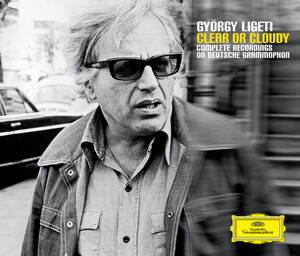
György Ligeti - Clear or Cloudy [Box Set]

In tribute to the great Hungarian iconoclast who passed away in 2006, Deutsche Grammophon released this affordable collection of his works spanning the 1960s to 1990s. The selections are varied, covering the many facets of Ligeti's personality and invention in a wide range of formats.

Disk 1:
Sonata for Solo Cello
Bagatelles for Wind Quintet
String Quartet No.1
Ten Pieces for Wind Quintet
String Quartet No.2

Disk 2:
Atmospheres
Volumina
Lux Aeterna
Organ Study No.1: Harmonies
Lontano
Ramification
Melodien

Disk 3:
Aventures for 3 singers and 7 instrumentalists
Nouvelles Aventures
Concerto for Violincello and Orchestra
Chamber Concerto
Mysteries of the Macabre
Double Concerto for Flute and Oboe

Disk 4:
The Big Turtle Fanfare from The South China Sea
3 Pieces for 2 Pianos
Etude for Piano, Book 1, No.2
Etude for Piano, Book 1, No.4
Concerto for Piano and Orchestra
Concerto for Violin and Orchestra

A great deal could be said about all of these works and the composer in general, but suffice to say he was one of the most influential and creative figures of late 20th century music; though his imaginative process was frequently confounding, his music still displays a sense of playful joy.

Download Disk 1
Download Disk 2
Download Disk 3
Download Disk 4
Own it New for 22.43!

Tuesday, August 26, 2008

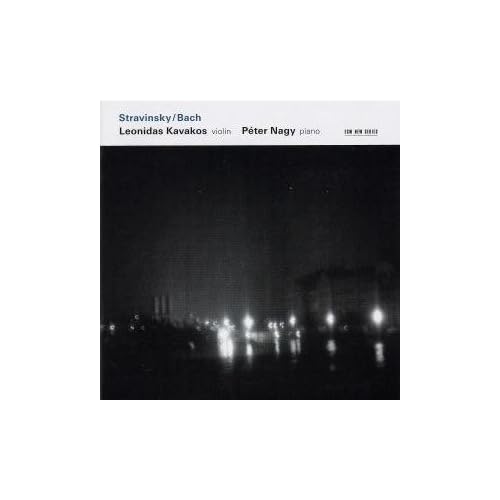
Leonidas Kavakos, Peter Nagy - Stravinsky/Bach

This is a wonderful album. Alternating between pieces by Igor Stravinsky and Johannes Sebastian Bach, Leonidas Kavakos and Peter Nagy dance and gasp through moments of baroque rationality, aggressive modernism, and achingly beautiful serenity. The combination of Stravinsky and Bach works quite well and the playing is masterful. The highlight here is the first piece, (and the least accessible), Stravinsky's relatively unheard of "Duo Concertante", but all the selections are gorgeous. Leonidas Kavakos' violin is the star of the show here - he plays with an expressive fervor, and his gasps for air add some humanity and struggle to his otherwise seemingly effortless playing.


Download
Buy

Sunday, August 24, 2008

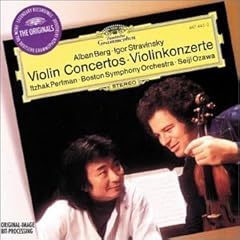
Itzhak Perlman & The Boston Symphony Orchestra w/ Seiji Ozawa - Violin Concertos


This Grammy winning recording of three complex, expressive works by three composers as different from each other as they were individually brilliant, was recorded in 1980 yet is still an essential reference for these pieces more than 25 years later. On the program:

1-2. Alban Berg's Violin Concerto "Dem Andenken eines Engels" ("To the Memory of an Angel")
The duration is 25'49. This was Berg's last completed piece before his death; the composition is rooted in 12-tone theory, but with an atypical amount of free artistic creation afforded, so that it often sounds tonal or beautiful. In this author's opinion the piece would serve as an excellent introduction to the territory covered by Schoenberg, Webern, Berg, and others, mainly because it is so exciting and lush, with a great deal of memorable melodic content. Even Bach makes a cameo during the close of the second movement.

3-6. Igor Stravinsky's Violin Concerto in D
The piece opens with a dramatic chord flair before quickly developing a theme a little bit reminiscent of Christmastime. And as this is Stravinsky, the whole affair is marked by relentless creativity, wit, and a very wide range of expression. Lasting 21'39 and spanning four movements, at times exuberant and at times heartbreaking, the listener will be finding new nuances in this composition for years.

7. Maurice Ravel's "Tzigane"
Technically not a violin concerto, at 9'31 this piece opens with four minutes of harrowing solo violin figures before some spooky new colors from the New York Philharmonic begin to enter. But while deceptively small in scale in the first half, this piece features a great deal of contrast, and before long a large number of variations in texture, rhythm, pace, and timbre occur with increasing urgency. Perlman really displays ferocity on this one, and each peak of energy from the whole orchestra is breathtaking.

Perlman and Ozawa have proved to make an excellent team, the former's great virtuosity and emotional impact matching beautifully with the latter's great instincts in timing, dynamics, and overall understanding of the music. The content of this recording proves that the tradition of 20th century composition is about much more than intellectual prowess and artistic austerity - it celebrates the human spirit in an unprecedented way.

Download
54 Used & New from $3.89

Saturday, August 23, 2008

John Schneider - Lou Harrison: Por Gitaro

This is an album entirely of solo acoustic guitar playing, with light percussion added on select tracks. Listeners may be skeptical they possess the attention span to sit through over an hour of such a bare overall texture, but novelties abound for the uninitiated into the colorful world of microtonal music.

Briefly, the story is this: ancient Greek scholars beginning with Pythagoras held with certainty that perfect music note intervals should be constructed from simple, whole-number ratios, such as 1:1, 2:1, 3:2, etc. These ratios respectively correspond with the perfect unison, octave, and fifth. However, seemingly irreconcilable problems arise when one tries to invent a complete tuning system with these simple ratios, for the numbers refuse to add up and at least one bad-sounding interval becomes inevitable.

The modern solution to this was a compromise: it was agreed upon that the octave should be split into 12 notes, each an equal distance apart in terms of ratios. Equal temperament tuning, then, is based upon the 12th root of 2 - an irrational number. While the irrational frequencies of equal temperament tuning are quite close to their perfect rational counterparts, this compromise means only the unison and the octave sound as good (in terms of purely physical consonance and dissonance) as what is theoretically possible. On the other hand, it is a practical solution: every interval does sound acceptably good for most people.

But not for all, and thus is motivated the need for microtonal composition, which eschews equal temperament and the very heart of Western music - the 12 notes per octave. Indeed, in non-Western spheres many cultures adopt altogether different tuning systems, such as Turkey with a 53 note per octave system. The compositional possibilities of these expanded pitch palettes fascinated many 20th century Western composers, including Lou Harrison, whose compositions are featured on the 2008 recording Por Gitaro.

Most of these pieces therefore feature themes which sound exotic or ethnic to Western ears, and all feature those golden, pure ratios lost to the system of equal temperament. John Schneider's playing is well-paced, precise, and not in the least lacking in emotion, ranging from somber and reverent ("Threnody to the Memory of Oliver Daniel") to whimsically playful ("Tandy's Tango"). This will appeal to audiophiles, guitarists, mystics, and any lover of beauty.

Download
Mode Records page