Here's an album I've been meaning to blog about for some time, Oorutaichi's Drifting My Folklore from 2007. I don't know much about Oorutaichi, other than that he's a Japanese solo artist/DJ who cooks up some seriously zany acid cartoon music. If you thought that was Cornelius's shtick, prepare to experience new levels of zany acidity - Drifting My Folklore comes bursting at the seams with mutated disco, freak funk, twisted pop hooks, synths and turntables galore, hypnotic grooves, and utterly bizarre vocal melodies that shouldn't work but somehow do. Rarely are albums simultaneously as strange and catchy as this one. Given the overwhelming number of different musical ideas that transpire throughout it, one must really admire Oorutaichi's flawless sense of craft in arranging so many instruments and studio effects into something cohesive, without a moment sounding out of place. (Then again, what could sound out of place on an album like this?) The studio tricks in particular are frequently mindbending and worthy of Nobukazu Takemura at his best. In the end there's probably no describing this album, so let's just say I can comfortably imagine alien robots doing their morning workout routine to it, and leave it at that.
Aside, Oorutaichi contributed one of the best tracks on Shugo Tokumaru's 2009 release Rum Hee, a remix of Shugo's song of the same name.
I just found out that 5 days ago was the late Toru Takemitsu's 79th birthday, so here's a belated dedication and celebration post. I bring you quite a large collection of instrumental and choral works by the visionary man Wikipedia documents as Japan's first international composer:
In the late 1950s chance brought Takemitsu international attention: his Requiem for string orchestra (1957 listen (help·info)) was heard by Igor Stravinsky in 1958 during his visit to Japan. (The NHK had organised opportunities for Stravinsky to listen to some of the latest Japanese music; when Takemitsu's work was put on by mistake, Stravinsky insisted on hearing it to the end.) At a press conference later, Stravinsky expressed his admiration for the work, praising its "sincerity" and "passionate" writing.[14] Stravinsky subsequently invited Takemitsu to lunch; and for Takemitsu this was an "unforgettable" experience.[15] After Stravinsky returned to the U.S., Takemitsu soon received a commission for a new work from the Koussevitsky Foundation which, he assumed, had come as a suggestion from Stravinsky to Aaron Copland.[15] For this he composed Dorian Horizon, (1966), which was premièred by the San Francisco Symphony Orchestra, conducted by Copland.
Takemitsu later became a close personal friend of John Cage, who encouraged him to embrace his nation's musical traditions for the first time, leading to a new stylistic period combining ancient Japanese and Western avant garde ideas. At the same time, Toru was also highly conscious of Western popular music, as evidenced by his many guitar transcriptions of Beatles and jazz songs.
This collection is actually the second installment of an even larger group of recordings of Takemitsu's music, called the Complete Takemitsu Edition. From what I can tell, Edition 1 consists of his orchestral works, Editions 3 and 4 cover his film works, and Edition 5 is made up of popular songs, tape, and theatre works. Supposedly the entire collection goes for around an absurd $1,000. Here's what we have on Edition 2, the instrumental and choral works:
Disk 1 1.Romance 2-3. Lento in Due Movimenti 4. Distance de Fee 5-7. Pause Ininterrompue 8-10. Le Son Calligraphie I, II, III 11. Masque 12. Landscape 13. Piano Distance Download
Disk 2 1. Ring for flute, terz guitar and lute 2. Corona for one or more pianists 3. Sacrifice for alto flute, lute and vibraphone with antique cymbals 4. Sonant for 2 flutes, violin, violoncello, guitar and 2 bandoneons 5. Hika for violin and piano 6. Eclipse for biwa and shakuhachi 7. Cross Talk for 2 bandoneons and tape music Download
Disk 3 1. Stanza I 2. Valeria 3. Seasons 4. Munari by Munari 5. Voice 6. Eucalypts II 7. Stanza II Download
Disk 4 1. Distance for oboe with or without sho 2. For Away for piano 3. Voyage for biwa 4. Garden Rain for brass ensemble 5-7. Folios for guitar Download
Disk 5 1. Bryce 2. Waves 3. Quatrain 2 4. Waterways 5. Les yeux clos 6. Les yeux clos II Download
Disk 6 1. A Way a Lone for string quartet 2-4. Toward the Sea for alto flute and guitar 5. Rain Tree for 3 percussion players 6. Rain Spell for flute, clarinet, harp, piano and vibraphone 7. Rain Tree Sketch I for piano 8. Rain Tree Sketch II, In Memoriam Olivier Messiaen for piano Download
Disk 7 1. Cross Hatch for marimba and vibraphone 2. Rocking Mirror Daybreak I, Autumn for violin duo 3. Rocking Mirror Daybreak II, Passing Bird for violin duo 4. Rocking Mirror Daybreak III, In The Shadows for violin duo 5. Rocking Mirror Daybreak IV, Rocking Mirror for violin duo 6. From far beyond the Chrysanthemums and November Fog for violin and piano 7. Orion for violoncello and piano 8. Entre-temps for oboe and string quartet 9. Rain Dreaming for cembalo Download
Disk 8 1. Signals from Heaven I, Day Signal 2. Signals from Heaven II, Night Signal 3. All in Twilight I for guitar 4. All in Twilight II for guitar 5. All in Twilight III for guitar 6. All in Twilight IV for guitar 7. Toward the Sea III Part I for alto flute and harp 8. Toward the Sea III Part II for alto flute and harp 9. Toward the Sea III Part III for alto flute and harp 10 Itinerant, In Memory Of Isamu Nogutchi for flute 11. Litany I, In Memory Of Michael Vyner for piano 12. Litany II, In Memory Of Michael Vyner for piano 13. A piece for guitar For The 60th Birthday of Sylvano Bussotti 14. And then I knew 'twas the Wind for flute, viola and harp Download
Disk 9 1. Equinox 2. Between Tides 3. Paths 4. A Bird came down the Walk 5. In the Woods I 6. In the Woods II 7. In the Woods III 8. Air Download
Disk 10 1. Bad Boy for 2 or 3 guitars 2-3. Piano Pieces for Children 4. A Boy Name Hiroshima for 2 guitars 5. Le Fils des Etoiles for flute and harp 6-17. 12 songs for guitar 18. The Last Waltz for guitar 19. Golden Slumbers for piano 20. Herbstlied for clarinet and string quartet Download
Disk 11 1. Wind Horse I 2. Wind Horse II 3. Wind Horse III 4. Wind Horse IV 5. Wind Horse V 6. Grass 7. Handmade Proverbs I 8. Handmade Proverbs II 9. Handmade Proverbs III 10. Handmade Proverbs IV 11-22. Songs for mixed chorus Download
There are too many excellent pieces here to really name highlights, but I'm particularly fond of the Piano Pieces for Children, Toward the Sea for alto flute and harp, the guitar songs, and the astoundingly gorgeous songs for mixed chorus, which to me almost sound like otherworldly slave spirituals.
Uploaded by request, this challenging Tzadik album is a little difficult to categorize. Some of the labels I was tempted to give it included free jazz, modern jazz, improvisation, and noise, but none of these are quite right. What we really have here is a set of ultra-complex etudes for piano and drums, which often sound improvisational or "jazzy" but were really composed with extreme care and attention to detail. Performing these are two of the most adventurous and capable musicians to rise out of Japan's avant garde scene, pianist/composer Satoko Fujii and drummer Tatsuya Yoshida of Ruins fame. After one listen to Erans, one thing is clear: Fujii and Yoshida did a lot of rehearsing for this album. Their stop-on-a-dime changes in tempo, meter, and dynamics are timed with perfection, and they don't falter once in playing through the songs' baffling structures.
This album is not for the faint hearted. The songs are fiery, menacing, relentlessly energetic, generally atonal, and nearly impossible to swallow all at once. Multiple listens reveal many subtle intricacies in their form, harmony, emotional content, and so forth, but they never lose their visceral nature, or their ability to quickly exhaust the listener. Even if you never listen to it from start to finish, this is a must hear.
Fans of Nobukazu Takemura will potentially like this album by No. 9 - Mushi No-Ne combines ambient/jazzy-techno/computery noise into a nice, laidback album. Standout track is "Bug Beats" - great melody.
First released in 1994, Tetsu Inoue's debut album Ambiant Otaku was limited to 1000 copies, yet made a significant splash in the fledgling minimalist techno community. Reissued in 2003, the album is now considered a classic, and original copies are highly collectible. Spanned by five lengthy compositions ranging from 10 to 18 minutes, Ambiant Otaku is a gentle space cruise through pillowy nebulae of sound. "Karmic Light" opens the album with a sparkling, hazy mire of enveloping drones, overtone sweeps, and polyrhythmic beeps. Light percussion gives the first section of the piece somewhat of a driving feel, but about halfway through, the texture becomes suddenly rarefied, and the listener simply floats, as though suspended in honey.
The rest of the album maintains this "drifting through clouds" consistency, more often than not without any percussion, but there is a surprising amount of musical and emotional variety from track to track, and even within single tracks. "Low Of Vibration" sports some unbelievably deep bass rumbles beneath soft washes of keyboard; "Ambiant Otaku" with its short, repetitive melodies has a slightly sinister edge; the beautifully serene "Holy Dance" builds gradually from smooth drones to include brushy percussion and echoing wah guitar. The album closes with "Magnetic Field", a gorgeous expanse of reversed synth melodies and silky electronic murmurs.
Now more than 15 years old, Ambiant Otaku has held up extremely well, largely due to its very tasteful, modern sound palette and subtle compositions. Since its release, Tetsu Inoue has gone on to become a major figure in experimental electronica, now with nearly 20 albums under his belt, including the glitchy, Oval-esque Fragment Dots (Tzadik Records, 2000), and collaborations with Bill Laswell and Taylor Deupree. For fans of the expansive soundscapes of Steve Roach and Brian Eno, Ambiant Otaku remains essential listening.
Algorithmic music has a long history, and can roughly be defined as music produced through the use of rigid, deterministic procedures - the opposite of improvisation. This allows for a great deal of music to be considered at least partially algorithmic, such as 17th and 18th century counterpoint, 20th century dodecaphonism and serialism, and more generally any genre requiring a certain compositional scheme. The artistic maverick John Cage frequently used algorithmic methods, including in determining the rhythms for the recently blogged about "Sonatas and Interludes", but Cage was also largely concerned with free creative impulse. Iannis Xenakis worked with concepts from areas as diverse as pure mathematics, physics, game theory, chance, and architecture in composing his influential sound works.
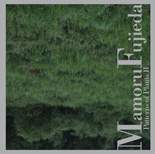
Mamoru Fujieda (1955 -) generates beautiful, otherworldly music from an even less likely source: living plants. Fujieda attached sensitive electrodes to the leaves of various plants, measuring their subtlely changing electric potentials. This data was then translated by the composer's algorithms into six collections of music, each in a different tuning system, written for traditional Asian and Western Medieval instruments. Patterns of Plants was released on Tzadik Records in 1997, featuring a live chamber ensemble performing the pieces. In 2008 this was followed by Patterns of Plants II, containing five new collections with different instrumentation, notably including violin. On both albums, the music is startlingly emotive and accessible, whether or not consideration is given to how it was made. In fact, most listeners would probably never suspect this was not "composed" by a human being in the ordinary sense of the word, a fact which is very easy to forget while listening. Fujieda's blind processes resulted in something starkly beautiful, balanced, organic, and very close to the human heart.
This 1999 album marked Japanese DJ savant Nobukazu Takemura's debut into highly experimental, difficult to classify music, which had previously been primarily club oriented or at least closer to the traditional side of IDM. "On A Balloon" kicks things off ambitiously with more than 20 minutes of utterly alien, amorphous sounds, whose original sources we can only guess at. His process for generating these sonic wonders involves sending some of the outputs of his mixing board back into the inputs, creating a feedback loop with many exotic possibilities. The palette of sounds constantly changes, but many melodic and textural themes do recur - Takemura's use of building up and breaking down patterns keeps the careful listener in constant attention and surprise. His use of stereo panning is also very impressive here; headphones are recommended to appreciate all the detail present.
Next is "Kepler", the most accessible song on the album and arguably the highlight. It finds Takemura in a minimalistic setting reminiscent of Steve Reich's most textural pieces, with beautiful warm synthesized melodic figures repeating in a meter that one would rather just cruise with than hope to count. Soon micro-aural vocal samples enter, unpredictably fracturing and interacting until they form steady rhythms. All the while the underlying harmony undergoes sudden modulations, drastically changing the mood from serene to ominous and back. This song is a gem among the best electronic creations this author has heard.
The remaining material maintains a high standard, though much of it is a good deal less accessible. On "Taw", many jarring, dissonant, awkward, and confusing sounds are juxtaposed in complicated ways that many listeners may not find musical in any traditional sense. This is not music to tap one's foot to. Nevertheless, Takemura's imagination is always at full force, and even the most bizarre moments have a sense of humorous invention to them. There is also beauty to be found all the way through, especially on "Icefall", in which a fuzzy opening melody is joined by bubbling bleeps and bloops to create a joyous, frenetic texture of bouncing notes. Closing the album is "Tiddler", a sluggish, good natured piece with the feel of a hymn or lullaby.
Artists, send any requests for the removal of album download links to TheSoftWatch@gmail.com and I will do so immediately. Note that no albums are hosted on Giraffe Kingdom, and the links are only shortcuts that anybody could find elsewhere with a little work. We believe from the heart that online media sharing ultimately benefits artists.
 Here's an album I've been meaning to blog about for some time, Oorutaichi's Drifting My Folklore from 2007. I don't know much about Oorutaichi, other than that he's a Japanese solo artist/DJ who cooks up some seriously zany acid cartoon music. If you thought that was Cornelius's shtick, prepare to experience new levels of zany acidity - Drifting My Folklore comes bursting at the seams with mutated disco, freak funk, twisted pop hooks, synths and turntables galore, hypnotic grooves, and utterly bizarre vocal melodies that shouldn't work but somehow do. Rarely are albums simultaneously as strange and catchy as this one. Given the overwhelming number of different musical ideas that transpire throughout it, one must really admire Oorutaichi's flawless sense of craft in arranging so many instruments and studio effects into something cohesive, without a moment sounding out of place. (Then again, what could sound out of place on an album like this?) The studio tricks in particular are frequently mindbending and worthy of Nobukazu Takemura at his best. In the end there's probably no describing this album, so let's just say I can comfortably imagine alien robots doing their morning workout routine to it, and leave it at that.