Showing posts with label rap. Show all posts

Wednesday, February 2, 2011

2010 - Fifty Great Releases, 10 - 6

10. Keith Jarrett & Charlie Haden - Jasmine

A quick glance at this deceptively simple album cover may lead many to see nothing more than a couple intersecting plane figures. Look a little longer however and you notice that the design is more naturally interpreted as the result of one continuous line motion - it actually cannot be broken down into two complete, overlapping rectangles. I smell an analogy. The music on this album, too, is deceptively simple. Keith Jarrett and Charlie Haden play so straight-ahead throughout Jasmine that it could have been recorded in the early '60s (except that a few of their song choices hadn't been written yet). However, there is a depth of communication and sensitivity of musicianship present that is rarely heard in jazz of any period, except from total masters of the art. This music cannot be effectively broken down into two complete, overlapping piano and bass parts.

Eschewing all pyrotechnics and showboating, Jarrett and Haden offer a revitalization of one of my favorite jazz formats: the stripped-down deep ballad. It had been three decades since the two played music together before Jasmine, but each is such a consummate musician individually, and each is so concerned with subtlety and refinement in particular, that their long time apart did nothing to affect their compatibility. They sound like old friends playing from the heart. If Jarrett takes somewhat more time in a leading position throughout, Haden makes the deliberateness of his understatement clear in his solos, which never once call special attention to technique or speed. All the delicacy is called for, as Jarrett explicitly writes that this is nighttime music for lovers - but it's also anytime music for the self-reflective. Anybody who appreciates the 1960s recordings of Bill Evans (Portrait in Jazz, Waltz for Debby, Moon Beams, Undercurrent and a lot more) should make it a priority to hear Jasmine, especially Jarrett & Haden's contrapuntal cover of Evan's jaunty and cool "No Moon At All". Without any uninspired moments, this is the most intimate and straightforwardly beautiful recording Keith Jarrett and Charlie Haden have released in a long time, together or apart.

9. Kayo Dot - Coyote
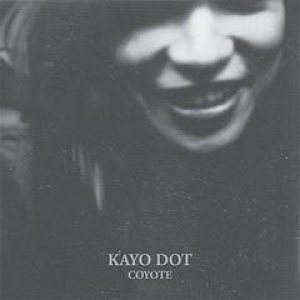
It's becoming increasingly hard to describe what kind of music Kayo Dot make. From the metal roots of their progenitors maudlin of the Well, through four LP releases and several changes in personnel, the band has evolved past the point of genre classification. I like the non-descriptive umbrella "new chamber music" for their third album Blue Lambency Downward and their latest, Coyote. The instrumentation includes bass, drums, vocals, violin, trumpet, saxophones, and synths - and almost no guitar, a significant choice for a group that's been moving further away from their aforementioned metal roots.

What unites all of their albums is the presence of (melo)drama: concept-driven narrative arcs, references to the occult, dark and often dissonant instrumentation, and an air of total seriousness. Actually, moments of Blue Lambency Downward reveal the band's unique sense of humor, but there's nothing funny about Coyote, except maybe its name. The story behind the album was developed by Yuko Sueta, artist and close personal friend of group-mastermind Toby Driver, during the last stage of her life; sadly, she lost a battle with breast cancer. Musically it's the band's most unrelentingly heavy and pitch-black album to date, heavily influenced by '80s goth rock bands like Bauhaus and Faith and the Muse. Driver also acknowledged another interesting influence on the album, Herbie Hancock's Sextant. At no point would I really call Coyote "jazzy" but there are definitely places where the trumpet and sax arrangements recall Eddie Henderson's colorful solos, and this is also the most rhythmically charged, at times almost groovy Kayo Dot album.

Coyote is the band's shortest LP at a little under 40 minutes, and given its intensity and complexity that's not a bad thing. "Calonyction Girl" opens very strongly with menacing gestures from the violin, bass and drums; rarely have I heard bass harmonics sound so sinister. Driver quickly brings his voice to the forefront with pained, elongated phrases in fluid rhythm. After three minutes the song picks up momentum and becomes more rhythmically defined, ultimately building to a crushing odd-meter vamp that could be Kayo Dot's spin on "Hidden Shadows" (Herbie Hancock, Sextant). The song also features one of the band's most surprising and lovely moments as it deceptively closes on a totally unexpected note of joy, with an extended major chord.

Continuing with a song-by-song analysis would result in an overly long review (not to mention spoil all the album's nice surprises), so suffice to say that the rest of the material maintains the standard of excellence set by "Calonyction Girl", though there are no further respites to happiness. The brilliant compositional arrangements throughout deliver fear, anger, sadness, beauty and wonder with an intensity few bands can match, and really, no other bands I know of are even trying to meld popular heavy music with 20th century avant-garde techniques in a remotely similar way. Kayo Dot are certainly a one of a kind group and they keep churning out masterpieces without repeating themselves.

8. Supersilent - 10
Supersilent's tenth album marks a very different direction for Deathprod, Arve Henriksen and Stale Storlokken. Lacking a drummer, the band has turned to increased harmonic sophistication and textural diversity to hold the listener's attention as they explore the infinite possibilities of free improvisation. The brief 10.1 begins with a piercing sustained trumpet note from Henriksen, over which Storlokken scatters some clear high piano notes. Storlokken harnesses chromaticism beautifully without giving a sense of total atonality, and the stark opener gives the impression of a dirge or elegy as Henriksen's tone takes on greater inflections of pain. Quite suddenly this melodic start completely gives way to texture, as the creeping fog of 10.2 fades in and Deathprod weaves a noxious mist with his one of a kind "Audiovirus", an amalgamation of signal processors. No band communication is apparent on this track, but it is effective ambient music. 10.3 and 10.4 return to the instrumentation of the opener plus electronics, with Storlokken on piano playing his most harmonically daring material to date. Apparently he was influenced by the compositions of Gyorgy Ligeti for these sessions, and one can definitely hear the impact of the 20th century avant-garde in general on his playing. Whereas previous Supersilent albums tended to be on the harmonically static side, generating interest mainly through dynamic variation, 10 features frequent distant modulations, chromaticism, artificial scales, and overall a much more impressionistic and unpredictable sound. When Storlokken untimidly lands on a surprising chord, the other players react and adjust immediately so nothing sounds like a mistake.

On 10.5 Supersilent work with bowel-rumblingly heavy drones and harsh noises reminiscent of their earlier material from 1-3, evoking the slow plod of some kind of megalithic golem bent on breaking stuff. It's an unexpected turn on this album, but a welcome switch to a sound many have come to expect from the band: thick, with a directly gutsy and aggressive attitude. This doesn't develop for long though, as 10.6 bends back in the opposite direction to textural sparsity and lovely diatonic melodies from the trumpet and a Brian Eno-esque wobbly keyboard sound. Beautiful melodic phrasing continues with the next two tracks; 10.7 is a dreamlike interlude for piano and trumpet with crystalline, pointillistic piano lines that are chromatic yet strangely consonant, and 10.8 - the longest track and functional centerpiece of the album - is arguably the most earnest and lovely piece the band has ever recorded, like a hymn on the sadness of existence, with Henriksen displaying the heights of his lyricism.

Things take another sharp turn with 10.9, another standout track and a return to Deathprod's thick ambient textures, this time more in the hazy extraterrestrial vein previously explored on 6 (probably Supersilent's most consistent, best album, and for me one of the absolute greatest records of the 2000s). Geologic bass tones mix with subtly shifting drone pads and bleeping alien signal transmissions to give a sonic picture of lonely beings marooned on an uncharted planet. Contrasting greatly with this is 10.10, the humble jewel of the album, less than 90 seconds of exquisite guitar, trumpet and piano interplay around a major triad. Yet another curve ball is tossed at the listener with 10.11, the fifth track on 10 under two minutes long. Here (and only here) percussion and repetition are the dominant elements, with a glitchy percussive sound repeating at unsteady intervals against computerized blips. Machine-like in timbre yet organic in development, the zen-like track reminds me of some of the more abstract material on the classic ambient glitch album Frame by Shuttle358.

10.12 closes the album on a foreboding note. Again Storlokken's piano playing displays sophisticated harmonic awareness, with dark polytonalities echoing Ligeti and Bartok. He mainly stays in the low registers of the piano, building tension while Deathprod and Henriksen provide additional dark colors. In the final quarter of the piece the trademark Supersilent UFO synth sound enters in the upper register, offering a climactic melody supported by the trumpet. Finally out of the dissonance the piano reveals a tonic note, and the piece ends with a firmly resolved cadence.

Supersilent have evolved in range with each release, but 10 displays them in a particularly sharp period of stylistic transition. Never before have their improvisations sounded so deliberate and planned out, almost mistakable for fully composed contemporary chamber music. Losing their drummer forced them to either quit or else drastically change their language and scope, and happily in choosing the latter they've recorded one of their most fascinating and moving albums.

7. Madlib - Medicine Shows

Medicine Show #4: 420 Chalice All Stars
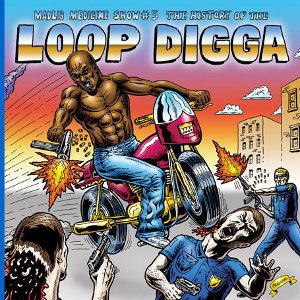
Medicine Show #5: The History of the Loop Digga

Medicine Show #7: High Jazz

Medicine Show #8: Advanced Jazz

The award for hardest working and most diverse producer in the game today goes to Madlib. At the beginning of 2010 it was announced that Stones Throw would be releasing a new Madlib full-length every month through the whole year, alternatively in the form of albums and mixtapes. Dubbed the Medicine Show series, ten of the twelve releases have seen the light of day; numbers 9 and 12 remain mysteriously unavailable. As it stands the collection is as follows:

#1: Before the Verdict
#2: Flight to Brazil*
#3: Beat Konducta in Africa
#4: 420 Chalice All Stars*
#5: History of the Loop Digga
#6: The Brain Wreck Show*
#7: High Jazz
#8: Advanced Jazz*
#10: Black Soul*
#11: Low Budget High Fi Music

*
mixtape

All of the installments I've heard range from very good to outstanding, and there are several I'd like to draw particular attention to. I've been hoping for a new Quasimoto album for a long time - The Unseen (2000) is one of my favorite hip hop albums ever, and The Further Adventures of Lord Quas (2005) is a great companion to it, if not a classic in itself. Episode five of the Medicine Show isn't a new Lord Quas album, but it's about as good instrumentally as The Unseen, and resides in a similar realm as that masterpiece. All of the material on the archival History of the Loop Digga was created prior to 2000, and it almost comes across like a collection of mostly-instrumental B-sides to The Unseen, making it a jazzy-hip-hop treasure trove. Alongside Beat Konducta Vol. 5-6 (Madlib's tribute to J Dilla) and the aforementioned Quasimoto albums, Medicine Show #5 has joined the ranks of my absolute favorite Madlib releases. The last five tracks feature Madlib freestyling with his Oxnard crew, and a number of Lord Quas motifs appear, like the sample "Warning...the Surgeon General...has determined...that the sounds you are about to hear...could be devastating...to your ears..."

Medicine Show #8: Advanced Jazz is a mixtape of trail-blazing jazz artists with some vocal skits interspersed throughout (it wouldn't be a Madlib release without some kind of vocal element). Happily, the skits don't detract from the great jazz selections at all, as they're either hilarious or interesting throwbacks to 60's and 70's culture. The tracks are named after jazz masters, like "Miles", "Ornette", "Pharoah", etc. I don't recognize any but one of the selections, namely Grant Green's terrific solo on "Back From The Gig" from Horace Parlan's album Happy Frame of Mind, which I reviewed a while back. This appears at the start of track 2, "Ornette", and none of the other various selections on this track sound like Ornette Coleman to my ears; there seems to be no connection between the titles and the artists present on each track. The material stays on the uptempo, fiery and exploratory side, and overall the mixtape gives the listener the impression of listening to one of the coolest jazz radio programs ever, without any DJ commentary but featuring a wide range of engaging supportive vocal performances. It sure would be nice if a full track list surfaced.

Other great entries in the series include: #6: The Brain Wreck Show, a collection of psychedelic 70s Kraut rock - turns out Madlib is a fan of Brainticket; #4: 420 Chalice All Stars, a crucial compilation of classic dub and roots reggae; #3: Beat Konducta in Africa, yet another deep, ambitious and banging entry in the Beat Konducta series; and #7: High Jazz, which features Madlib playing different live instruments under many aliases like Yesterday's New Quintet, the Jahari Massamba Unit and others, showing Madlib to be not just one of the greatest beat composers but also an adept and sensitive live player. I can't wait to find out what the last remaining album and mixtape will be like. Maybe, just maybe, the long awaited third Quasimoto LP is close at hand. Until the day that certain-to-be-crazy album emerges, though, I'm more than satisfied with the torrent of releases Madlib has been churning out; not all of them are top tier relative to his entire discography, but all of them are top tier relative to new music in general.

6. Gonjasufi - A Sufi and A Killer
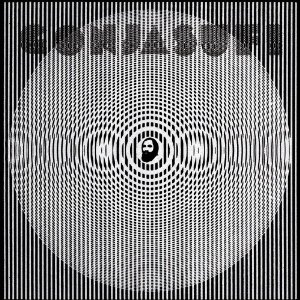
One of the most diverse, unique and memorable albums of 2010, A Sufi and A Killer was released to just about unanimous acclaim, and I won't be going against the grain. Gonjasufi came on my radar via his contribution to Flying Lotus' Los Angeles in the form of those hauntingly cracked vocals on "Testament". Shortly before the release of Gonjasufi's debut LP, the single "Ancestors" made waves on the Internet; produced by Flying Lotus, the brilliant track combines ocean-deep bass lines, harmonium drones and introspective sitar melodies with Gonjasufi's anguished vocals on the brink of breaking. This track had me looking forward to an album midway between Los Angeles and India, but A Sufi and A Killer is much more multidimensional than that. Most of the production is handled by The Gaslamp Killer, well known for his encyclopedic knowledge of obscure world psychedelia, and Gonjasufi's debut LP has not just Indian flavors but Turkish, Middle Eastern, blues, rock, soul, folk, funk, hip-hop and even doo-wop. All of these influences are filtered through a lens of decay and grime - as Flying Lotus put it, "timeless, incredible filth" - resulting in a one-of-a-kind sound that's simultaneously ancient and futuristic. The opening prelude "(Bharatanatyam)" with a steady pounding drum and tribal vocal chant sets the scene with what sounds like centuries' worth of sonic distortion and patina.

Standouts are many on this almost hour-long album. Preceding "Ancestors" (the only Flying Lotus-produced track on the album, and one of the best cuts) is the excellent "Kobwebz", soaked in reverbed, overdriven guitars and vocals, spacey synth swoops and Turkish scales. Later there's the golden shimmering 70's psych of "Stardustin'", immediately followed by "Kowboyz and Indians", the most swagged out Bollywood-ish track I've heard. Several gems are contributed by producer Mainframe, including "Candylane" with its fatally-funky bassline, and the retro-electronic, almost Radiohead-esque "Holidays". On "Ageing", produced by The Gaslamp Killer, Gonjasufi imitates the wispy, frail vocals of a wizened old man, over a twisted Delta blues. Throughout the album Gonjasufi demonstrates amazing vocal range, and the producers treat his timbre in a variety of effective ways, usually towards the end of making it sound dirtier.

A Sufi and A Killer is an ambitious and somewhat sprawling album that requires multiple listens to really unlock, but it should be clear from the first that it's like nothing else out there. Gonjasufi came on the scene a fully matured artist with a compelling vision, and I eagerly await his next release.

Tuesday, January 11, 2011

2010 - Fifty Great Releases, 20 - 16

Sorry these are taking so long to get out. Part of the trouble is I keep checking out more albums from 2010, and a lot of them are really great so it's tempting to revise my Top 20. But all too often the excitement of hearing something new can lead to an initial overrating, so I'll resist temptation and stick with the list I formulated just before New Year's. The other problem is, it's gotten to the point where all of these releases are so great that I want to say a lot about each one, which is daunting, and in certain cases I'm not really even sure what to say. Settling on an ordering has also been extremely challenging. But onward we go...

20. Freddie Gibbs - Str8 Killa

Freddie Gibbs is a contender for the single most talented emcee on the rise today. He still hasn't released a proper debut studio album, but this nine-track EP, just shy of 40 minutes long, almost feels like one. Four elements come together to make Freddie Gibbs the most exciting young rapper: 1) he is technically a monster on the mic, effortlessly shifting his flow into any number of metric styles, sometimes at dizzying speed; 2) he only raps the truth; 3) the truth is that he hustled his way out of one of America's harshest ghettos, in Gary, Indiana, surrounded by poverty, violence and drugs; 4) he delivers his words over ace production. Str8 Killa is aptly titled - track after track kills. Overall the EP is an unapologetically heavy listen, with eight gut-punching descriptions of struggle, crime, abuse, death and most of all, force of will to survive in a harsh world, surrounding the center track "Personal OG", Str8 Killa's only respite to a kind of comfort, but still one tinged in darkness. Freddie Gibbs released this EP alongside a much longer mixtape titled Str8 Killa No Filla, ironically titled since it regretfully contains not just a little filler, mostly in the form of some weak guest performances and mediocre beats. But Str8 Killa is nothing but that. Don't miss this proper label debut of a rapper who will surely become known as one of the most vital alive.

19. Daedelus - Righteous Fists of Harmony

In my estimation, this 26 minute EP is the best material Daedelus has released since the full length Daedelus Denies the Day's Demise in 2006. It is also his first release for Flying Lotus' Brainfeeder label, and arguably his most explorative and creative work to date. Behind the lush music is a complex unifying concept, the Boxer Rebellion of China at the turn of the 20th century. Now, I love a good concept album, but unfortunately what could have been a very interesting story is presented here in rather vague terms. In other words, this album earned this position on my list for its strictly musical merits. Nothing about this sounds Chinese or antiquated; other than from its name, song titles and certain lyrics, you would never guess this EP is about what Daedelus says it's about. But that's alright; Righteous Fists of Harmony features heart-swellingly lovely songs. The most accessible is "Order of the Golden Dawn", featuring Daedelus' wife Laura Darlington on vocals. The tune sounds like a lost bossa nova classic worthy of the great Nara Leão. Why we get bossa nova in the middle of a trip to rebellious China ca. 1900, I do not know, but it sure is a wonderful track. Other standouts are the short instrumental "Tidal Waves Uprising" with its multitude of acoustic guitar loops building up and threatening to spill over; the mysterious and nostalgic "The Open Hand Avows" with high lilting synth melodies and hypnotic arpeggios; "Succumbing To" with gorgeously sighed vocals from Kid A and fully acoustic instrumentation including strings and a bass clarinet; and the dreamy closing track "Fin de siècle" which sounds like it could have been composed by Maurice Ravel, a complement of the highest order. A couple other tracks are more aggressive and evoke the violence of the Boxer Rebellion; the most surprising of these is "The Finishing of a Thing", the early climax of the EP and the most programmatic (as in illustrative) track, in which a hesitant fanfare is overwhelmed by an avalanche of war drums and noise. The following three mellow tracks are denouement after that explosion of sound, and it's an interesting puzzle to imagine what they all have to do with the overarching concept. If the overall relation of the Boxer Rebellion to this music is a little hazy, at least that allows for a variety of possible interpretations for the listener. Daedelus deserves much applause for this artful release that owes as much to acoustic as electronic music.

18. Onra - Long Distance

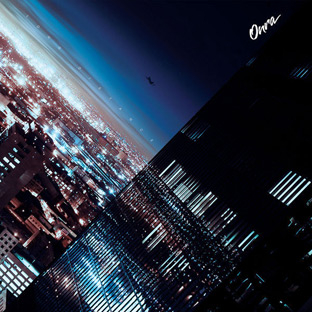
Like the currently in theaters "True Grit" by Joel and Ethan Coen, Onra's Long Distance is a lovingly-made genre work. The French beatmaker aimed to put a fresh spin on funk, boogie, and R&B from the 80s and 90s, revitalizing these styles with the luxurious production of contemporary hip hop. The result was a smashing success, and one of my top summer jams of 2010. The dominant mood throughout is blissful nostalgia, all neon glo-lights, disco balls and slap bass. If that makes it seem like the album rides on its oldschool appeal, that isn't really the case; the songs are deep and detailed enough to warrant many listens. Not a fully instrumental affair, a lot of strength is lent to Long Distance from several vocals performances spread across the album, like the irresistibly catchy "High Hopes" featuring Reggie B., and "The One" featuring T3 of Slum Village. As great as the few vocal-heavy tracks are, three consecutive instrumental tracks around the middle of the album got stuck in my head for the longest: "Send Me Your Love", a deeply beautiful shimmering funk ballad; "We Out Buddy", an uber-groovin synth romp that somehow makes me think about Ghostbusters; and "Moving", a perfectly hazy throwback to G-Funk with some downright dangerous bass. My only complaint is that Long Distance is a bit long for what it is; a few lesser tracks could have been cut from the second half without any damage done to the album. Quibble aside, Onra has certainly proved himself a capable and versatile musician - who could have predicted the switch to this style after his great chronicle of Chinese and Vietnamese pop & hip hop, Chinoiseries?

17. A.G. - Everything's Berri

"Song for song, hook for hook, verse for verse / Line for line, or word for word, or letter for letter / I'm A.G.!" Wordsmithing on that level or better pervades Everything's Berri, my favorite rap album of 2010. A.G. or André the Giant has been active for two decades now, seizing credibility early on as a member of the legendary Diggin' In The Crates crew. "Twenty years in, so my pen is worth more than your necklace." A.G.'s attitude on Everything's Berri is generally laid back and cool but not comfortable. Many of the tracks sound mellow, even pretty, but A.G. isn't just kicking back on his laurels: "Put our life where our mouth is (Money ain't enough) / Death before dishonor (You die if you bluff)." Plenty of grit and dark self-reflection comes into the picture throughout the album, like on the fierce "Destroy Rebuild Repeat": "To reach my level you have to fall / Then rebuild, and repeat / Times that times four / Lose your peeps, lose your whore, lose your freedom, lose it all / Then get it back / And after that if you didn't crack / Then we'll consider that. / To be here is a miracle / But it's a phenomenon to be this lyrical / Now sit with that." Production-wise the album mostly favors stripped down and jazzy instrumentation, with piano, Rhodes, horns, and exceptionally good flute work. The best tracks sound like classic 90s joints, full of soul, and only one of them sticks out in a weird way, namely "No She Didn't", the closest the album comes to being club-friendly. I can easily imagine Akon doing something over the beat to "No She Didn't" - not a good thing. A.G.'s rapping on this sketchy track is pretty goofy as well, but fortunately it is immediately countered by the dope "Fuck The Club". The rest of the album is remarkably consistent, even if a few of the tracks represent more mainstream themes like pretty girls and/or chilling out; the production and lyrical craft is solidly creative 'til the very end. On the haunting closer "YMI Still Here", A.G. questions how he has outlived so many of his peers and friends, mourning the loss of 2Pac, Biggie, Big L and a host of others. We are lucky to still have this veteran around - André the Giant is an authentic force for the old school yet one of the freshest emcees active today.

16. Erykah Badu - New Amerykah Part II: Return Of The Ankh

I'm a little embarrassed to admit Return Of The Ankh was the first album I heard by Erykah Badu. Given how high profile the singer is, I'm sure I've been hearing her songs on the radio for years, but I somehow never realized Badu is much more than a radio-single type of artist, that in fact she's arguably the most important contemporary soul singer. Given what a major success this album was, I doubt I will be able to say anything about it that hasn't been already said a hundred other places. So let me simply say that it's an outstanding assortment of R&B/soul/hip-hop/funk without a single dud, with production from the likes of 9th Wonder, Madlib, and J Dilla, among others, and with Badu's trademark jazzy improvised vocal flourishes. The album doesn't feel particularly weighty in concept or message, but it can be put on at any given track and instantly appreciated. From start to finish Return Of The Ankh never wavers from a position perfectly in between sophistication and direct enjoyability.

Saturday, January 1, 2011

2010 - Fifty Great Releases, 30 - 21

30. Big K.R.I.T. - K.R.I.T. Wuz Here

Bit K.R.I.T. (King Remembered In Time) released this full studio album as a free digital download last June and firmly established himself as one of the most exciting voices of the South. His intelligence and hunger to succeed are delivered through the classic tradition of Underground Kingz, with honest lyrics backed by highly musical production (Big K.R.I.T.'s own) that includes funky organs, mellow Rhodes, wah guitars, cold piano runs and a lot more. Some of the cuts are deliciously 90s, like the super faded and smooth "Moon & Stars" featuring the still-relevant veteran Devin The Dude. Big K.R.I.T. has it all and I can't wait until I'm hearing new tracks of his dominating the rap charts. One can hope.

29. Dirty Projectors and Bjork - Mount Wittenberg Orca

New jaw-dropping material from one of the most unique and important songwriters active today, Dave Longstreth. I revere this guy's ability to combine direct pop sensibility with really smart composerly ideas that draw from, for example, Medieval polyphony (hocketing). I feel like, if he wanted to, Longstreth could easily compose amazing works for the full modern orchestra. Instead, we get advanced works for the modern "indie band" format that sound like no other music in existence. This stuff is so good it's worthy of scholarly attention. The fact that Bjork is on this EP is somewhat incidental unless you happen to be extremely fond of her voice - it feels fully like the aesthetic product of Dirty Projectors. Compositionally as exciting as Bitte Orca, this might have made my Top 10 if it was longer.

28. Ras G & Samiyam - LA Series #3

I can't get enough of this stuff. You've got six songs on this little split 10", three each by Ras G (& The Afrikan Space Program) and Samiyam. If you're not hip, these guys are two of the best Brainfeeder affiliates after Godhead Flying Lotus Himself. Ras G is something like the reincarnation of Sun Ra as a hip hop producer, using his dirty GarageBand concoctions to communicate with interstellar beings and blow out venue sound-systems. Samiyam brings the next movement in gritty, nostalgic hip hop with generous use of Nintendo sounds. The two of them make for a dynamic duo on this short, blunt-fueled space romp. Put your car's bass on +3 - Los Angeles bangs.

27. Polar Bear - Peepers

Polar Bear play an eccentric blend of jazz, funk and punk that is generally really catchy, though they aren't afraid to explore more dissonant and aggressive territory. The two tenor saxes that comprise the main melodic element of the band sometimes work with extended techniques that recall the great Eric Dolphy's voicelike squawks and howls. Interesting use of electronic manipulation also comes into play at times, resulting in a sound akin to The Contortions sent fifty years into the future, but without those inimitably pissed-off James Chance vocals. A great followup to their self-titled debut, Peepers is full of crafty songwriting and gutsy solos.

26. The Roots - How I Got Over

Now almost 20 years in the rap game, The Roots prove with How I Got Over that they are still capable of dropping releases as hungry, observant, classy, and downright essential as Phrenology, Things Fall Apart and Illadelph Halflife. This band probably has as good a ratio of artistic credibility to mainstream acceptance as it's possible to get in the hip hop world nowadays. They have honed a widely appealing sound, increasingly including cross-over elements from rock and roll and pop music, without ever compromising their message of elevating the mind or straying from the core values of hip hop. Black Thought is one of the best emcees, period. ?uestlove is a top-shelf drummer and producer, and the fact he got Amber Coffman, Angel Deradoorian, and Haley Dekle of Dirty Projectors fame for the opening track "A Piece of Light" should clue you in to how cool How I Got Over is. In a genre where live "bands" don't properly exist (or are extremely rare), The Roots are as vital as they come.

25. Supersilent - 11

Supersilent are one of my favorite groups of all, so I was really happy when 2010 brought not one but two excellent full albums by them. For the uninitiated: Supersilent free-improvise absolutely everything they play, and maintain an air of mystery by just numbering everything they release. I have to admit, when it was announced that Supersilent's drummer Jarle Vespestad was leaving, I had fears for the future of the group, even though it's undeniable that some of their most moving recordings don't feature the drummer. In truth, Supersilent are doing fine without a drummer, as 10 shows, but this vinyl-only LP is a welcome gift for anyone who misses the classic Supersilent sound. Its contents stem from the same sessions that gave us 8, and Vespestad's drumming appears in top form. In my opinion, Supersilent have only released one miss, the highly unusual (even for them) 9, an album of explorations on three Hammond organs. Besides that anomaly, the band has been mining gems for over a decade now, and moments of 11 are as breathtaking and difficult to accept as improvised as anything they have ever recorded.
24. Hiroki Sasajima - Nille

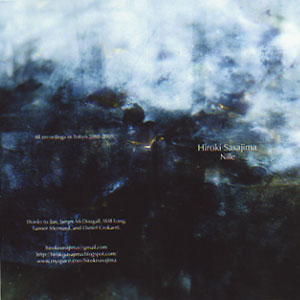
I can't say this about many albums: Nille scared me on the first listen. It possesses a genuinely haunted quality that downright spooked me when I gave it the proper, immersion-style listening test: with headphones, lying down in the dark, full attention. There may be no other way to really appreciate this work, which is extremely minimal in terms of traditional musical content. Nille operates mostly with field recordings, opening with an aural depiction of a vaguely nautical location marked by a subtle and somehow ineffably cruel background reverberation. Tension builds through unidentified wooden thumps and scrapes, and over several minutes the strange resonance thickens to something more miasmatic, as delicate sounds like clinking crystal chains join the mix. Later on, the sound of rustling, crumpling paper builds into an atmosphere of anxiety before giving way to primitive electronic hums. As eerily foreboding and bracingly austere as this music is, there is also something entrancingly beautiful about it; Nille ultimately resides in an emotional no-man's land for the brave and patient.

23. Janelle Monáe - The ArchAndroid

A fantastically ambitious debut album, The ArchAndroid somehow combines hip hop, R&B, soul, rock, funk, rap, pop, electronica, and at times even classical orchestration without any serious missteps. It doesn't even sound overly ambitious, sprawling, or unfocused - just amazingly fresh, confident and exciting. Janelle Monáe has a very strong and individual voice, overlooks her own production, and has cooked up some kind of sci-fi plot behind all of this in which the Android is a mediator between the majority and minority, like Neo in the Matrix, or something. (Her words). Pop brilliance that I bet Michael Jackson, rest his soul, would have gotten behind.

22. Various Artists - Pomegranates: Persian Pop, Funk, Folk & Psych of the 60's & 70's

The post-Beatles psychedelic movement reached a lot further than a lot of people may realize. Yeah, there's all that wonderful Brazilian psych a la Os Mutantes, Os Brazoes, Tom Ze and etc. And you've got your Amon Duuls and Ash Ra Tempels and other Kraut rockers. But who knew Iran had a thriving hippie scene in the 70s?? This compilation was one of the most eye-opening records I heard in 2010. As a "stupid American", to borrow a stereotype popular around the world, I didn't commonly think about Middle Easterners going out and shaking their asses to groovin James Brown-esque jams. But it seems that, as a form of rebellion against the Shah's autocratic rule of the 70s, that's exactly what some people did, at least until such practices were deemed sinful by traditionalists and fanatics after the Revolution of '79. "One form of tyranny swapped for another", as the liner notes to this absolute jewel of a compilation puts it. Broaden your cultural awareness and collection of deep dance cuts with this trove of forgotten treasures.

21. Celer and Yui Onodera - Generic City

This review will be necessarily personal. If my past review of their albums Cursory Asperses and In Escaping Lakes is any indication, I am quite taken by the diverse ambient oeuvre of Celer. Heck, I even dedicated my debut album as an ambient recording artist to them. I thought I had worked out a pretty clever game plan with my album, combining totally unprocessed, "anecdotal" field recordings of real environments, with pensive, atmospheric drones and instrumental textures. I thought I was giving just the right amount of a nod to Celer's legacy (the drones), while bringing my own element to the game (the field recordings). Turns out, I'm not at all the first person to think of combining these two basic elements; in fact, while I was toiling on my album, Celer and Yui Onodera had already done it, and done it extremely well. I couldn't have known that, as Generic City, to my knowledge the first Celer album to use anecdotal field recordings in any overt way, would not be released for some five months after my album. It is quite a revelation hearing them work in this format; I am humbled at the pristine quality of their recordings, how finely the episodes of sound transition, and as always, how lovely and full of life the drones are. Several years of work went into the creation of this album, and you can hear it. For all of this praise, there is a "but" I have to mention at this point - Celer were at their best working alone and with abstract sonic material. As engaging as Generic City is for the most part, there are times when the musical arrangements and field recordings seem to be incongruous, one's presence distracting from the mood or character of the other. When this happens, the listener is stirred out of the otherwise perfect sense of place the music establishes, suddenly remembering that these sounds are not natural but have a hidden contrived organization. Fortunately, this doesn't happen too many times, and the album's more effective parts paint shockingly vivid urban scenes that instill complex emotions. Quite possibly the least characteristic album Celer ever had a hand in, and therefore one of their most intriguing, Generic City resides among the stronger of the band's many releases from 2010.

To be continued!

Friday, December 31, 2010

2010 - Fifty Great Releases, 40 - 31

40. Sufjan Stevens - The Age of Adz

This album put Sufjan Stevens firmly back on my radar. I had kind of lost interest by the time Illinoise had been out for a year, and it seemed like his material after that was rapidly declining in substance. An album of lesser Illinoise outtakes; a Christmas collection. Then eventually came The Age of Adz, which totally defied my expectations and found Stevens exploring a much more electronic sound, full of urgency, anxiety and doom. Melodramatic this is, to the extreme, and the closing track exceeds 25 minutes and finds Sufjan busting out the vocoder, a regrettable last-minute miscalculation in my opinion. The best moments of the album though are mind blowing arrangements on the level of Tyondai Braxton's crazed Central Market.

39. Brian Eno - Small Craft on a Milk Sea
A slightly uneven bag, but the better tracks are the best Eno has released in decades, equal to his classic recordings. I think Eno should leave the beat-driven techno-esque tracks to younger souls and play to his strengths, namely creating mesmeric soundscapes tinted with direct melodies. Fortunately, the majority of the tracks on this album are of the latter type, and they are exquisite.

38. 1000names - Illuminated Man

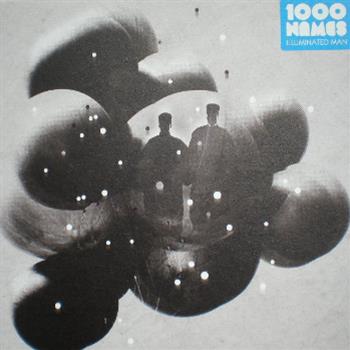
1000names are a Bulgarian duo who sound a little too close to pre-Cosmogramma Flying Lotus for comfort. That said, this album is undeniably jammin', without one wasted track. Their craft is superbly polished, with all the tricky syncopations and lush textures that define this genre. Unfortunately it sounds a little too much like a product of its times to get higher on my list. Still, if you're a fan of this type of music, you won't regret having this one in your collection.

37. Joanna Newsom - Have One On Me

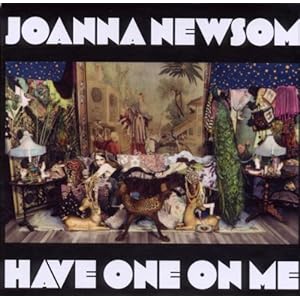
First let me admit I haven't listened to this one enough times. It's a tough pill to swallow, even though individually just about each song is quite strong. Three disks is a lot of music to push on anybody, even if it's really nice music. I just can't muster the endurance to figure out the plan of this album, its structural arch. But when I pick a song at random, I'm reminded of all the reasons I love Joanna Newsom, and plus, her voice has gotten better than ever. I think this could click for me in a big way yet, but for now Ys remains her masterpiece.

36. Asura - Asura
Here is another album with some slight potential to be confused for early Flying Lotus, but fortunately Asura mostly works in a pallet that is distinctly softer and cooler than Mr. Ellison's, resulting in an album that is more laid-back and impressionistic than any by FlyLo. It's gotten to the point that a lot of people are producing impressive sounding beats, so this is no longer enough to declare a musician as artistically relevant. Good thing Asura can go beyond that and make a tightly-focused album with a sense of movement from start to finish, always accessible and groovin' but with an introspective edge. This impressive debut clearly has a honed statement behind it (though I won't attempt to translate it into words), and it promises great work in the future.

35. Oneohtrix Point Never - Returnal

I had the great pleasure of seeing Oneohtrix Point Never rearrange gray matter at the Low End Theory, a most unlikely venue for his music. There are no beats here whatsoever, and he didn't drop a single one that night, either. I heard one guy shout "Play some real music!"; he clearly didn't appreciate or understand the trip OPN was taking the rest of the club on. To my great amusement, one couple standing right up by the stage was making out for almost his whole set. This is visual music that will show you worlds you didn't know you could dream about. The opening track is a burst of ultra-intense noise in dozens of colors (brace yourself!), and from there things settle down into much more dreamlike territory for the rest of the ride. The sound of an astronaut with dementia dreaming of an artificial intelligence disintegrating into an accretion disk of blue-hot plasma - that is something not too far from OPN's sound.

34. Shigeto - Full Circle

Another instrumental hip-hop album, and there are more to come. This stuff has just been exploding the last couple of years. Once again, a lot of the tropes you find here were essentially pioneered by Flying Lotus, but it's important to consider that nowadays the beat situation is like what happened with jazz and its great innovators - a figure like Bill Evans comes along, and suddenly everybody is playing stacked fourth voicings. Now, people still make effective use of those voicings today, and it isn't really fair to say they're ripping off Bill Evans, just like it would be unfair to call this album a ripoff of Flying Lotus. Shigeto is blazing his own intriguing trails, prioritizing lyrical melodies and nonstandard instrumentation (I hear some traditional Asian sounding instruments, hearkening to Shigeto's ancestry). Importantly, this album easily elevates itself above being a "collection of beats" and sounds like an artistic statement.

33. Gang Gang Dance - Kamakura

Only 15 minutes long, the single track on Gang Gang Dance's Kamakura EP covers more interesting territory than your typical band has recorded in their whole career. The first 10 minutes are a whirlwind ride through various mutations of funky breaks, fragmented hip hop, grime, dub, and general psychedelia. Things then wind down to an elegantly lyrical and melancholy finish, as Lizzi Bougatsos provides her singular vocals for the first time on the recording. People accustomed to her frenetic whoops and tribal babble won't find any of that here, only beautiful restraint. GGD have been on a serious roll with God's Money, Saint Dymphna, and now this. I regard them as the finest band of the weirdo-indie Brooklyn scene; they're certainly the hardest to pigeonhole.

32. Jason Moran - Ten

This album sees Jason Moran pulling out a lot more stops and displaying more baffling inventiveness than Lost In A Dream, album #47 on my list. This kind of jazz isn't to everybody's taste, because they do a lot of crazy things with time signatures and tempo changes and unusual scales, that might be regarded as being mostly for fellow musicians to appreciate. As I hear what they do, it always serves a greater purpose, not to show off chops. "Gangsterism Over 10 Years" is bliss in groove form - I don't hear too much jazz that makes me go "this just rocks so hard". Backed by a high-caliber and very dynamic band, Jason Moran displays his full potential on this thrilling record. Jazz is so far from dead!

31. Guilty Simpson - OJ Simpson

Another Madlib invasion, this is one of the least conventional rap albums of the year. It's bloated at 24 tracks, and only about half of those have rapping. The rest aren't disposable skits, however, but a collection of great Madlib beats with thought provoking spoken word samples that tell a story. This makes OJ Simpson an unabashed "concept album", and a somewhat challenging listen - Guilty's rap tracks are so good, one almost wishes it was a more straightforward collaboration. But with Madlib on deck nothing is ever straightforward, and repeated listens reveal this to be a deep, robust and nuanced journey, even if it seems unfocused at first.

To be continued!

Monday, March 8, 2010

MC NoCanDo - Jimmy the Lock

Winner of Scribble Jam '07, dynamic host of the world-famous Low End Theory club in LA, and slaughterer of hundreds of would-be battlers, NoCanDo is going places. Scratch that actually, because his debut Jimmy the Lock on Alpha Pup proves that he's arrived. It's easy to see why a record like this is a formula for success: it combines equal parts unpretentious, fun party themes (this is a sex, drugs and rock 'n roll record, says NoCanDo), high-brow social commentary executed with undeniable poetic skill, and cutting-edge future production and scratches from an LA all-star roster including Nosaj Thing, DJ Nobody, Thavius Beck, Daedelus, Free The Robots, Maestroe, the Gaslamp Killer and D-Styles.

This is the first release I've heard out of the cerebral LA underground hip hop scene that I think has real potential to break through to a wider audience, especially thanks to great singles like the club-shaker "Hurry Up And Wait". With sparse, ultra-bassy production from DJ Nobody and all too many killer lines ("Man, I'm as cold as they come / If I was holdin' a gun, I'd shoot a hole in the sun"; "If I keep rushin' man I could be called a Communist / I break speed limits and laws and all my promises"), there's no reason this song can't be 2010's "A Millie". At the end of the track, NoCanDo suddenly breaks into double-time, and closes the incendiary stanza with the non-rhetorical question "When did all the passion leave?!" This is mainstream-sensible rap with real passion.

Another highlight comes toward the end of the album with "Skankophelia", a hilarious and clever twist on the obligatory girl-tribute track with sparkling clean Daedelus production (sampling Curtis Mayfield's "Makings of You" - classic!). NoCanDo's flow on this track is refreshing in how it features some nice sized rests and changes of scansion rather than the more typical approach of a constant stream of syllables. "Lady, gimme a update for fuck's sake / You're so precious; it's no fetish / Your whole essence is pro- / -fessional whore; I'm head over heels, no question / I suffer from a bad case of skankophelia." Though this track displays it best, NoCanDo's flow is anything but monotonous throughout the album.

Other tracks expose the less glamorous sides of Los Angeles, revealing, critiquing, and at times reveling in its grimy and morally questionable underbelly, full of "Blue collars / Bright lights / Brown skies / And bullshit" (hook to the burner "Exploits and Glitches"). Tackling issues like drunk driving, promiscuity and unprotected sex, race, sexuality and California's passing of Prop. 8, drug abuse, and street violence, Jimmy the Lock has a lot of legitimate and intelligent content without ever sacrificing fun, character and attitude. Also, there isn't one skit on the entire album.

Likely to be one of the most talked about underground rap releases of the year, NoCanDo's major studio debut has, pound for pound, more brains, swagger, and neck breaking beats than just about anyone can shake a mic at.

[Link removed]
Purchase

Post script: many thanks to Alpha Pup Records for reporting this review on Twitter!

Monday, November 16, 2009

Madlib - Mind Fusion Vol. 1-5

For my first (and extremely long overdue) post on hip hop I bring you some rare mixtapes from my number 1 favorite producer/DJ, Madlib, aka the Beat Konducta and a thousand other aliases. Actually, there's so little official information out there about these tapes that their authenticity has been disputed. They sound like the real deal to me though - the left-field loops, crackling jazz samples, smoked out interludes and obscure vocal recordings all scream Beat Konducta.

All the information you need to know about these, including partial (sometimes complete) tracklists and some really cool photos, can be found on this website. Here are some brief descriptions of mine of each installation.

Vol. 1 is mostly a Stones Throw sampler, featuring remixes of tracks by Madvillain, Quasimoto, Oh No, MED, Wildchild, and others, but also including material by Method Man, Common, and Bobby Hutcherson.


Vol. 2, one of the best in the series, is a jazz mix featuring some scorching 70's fusion, Brazilian jazz, impassioned spoken word and trips to outer space.


Vol. 3 is an eclectic selection of dub, jazz, comedy recordings, psychedelic soul, and much more - another standout.


Vol. 4 focuses on hip hop, and includes a set of Nas vs. Jay Z remixes.


The first long track on Vol. 5 is called "Dirty Crates from Around the World". The second is a live set with some great chopped up Dilla tracks, and closing with Madvillain's "Closer" given jazz horn treatment.


Now that I've (finally!) opened the hip hop floodgates, prepare to see a lot more of this incredibly dynamic and progressive genre on Giraffe Kingdom.

[Links removed]